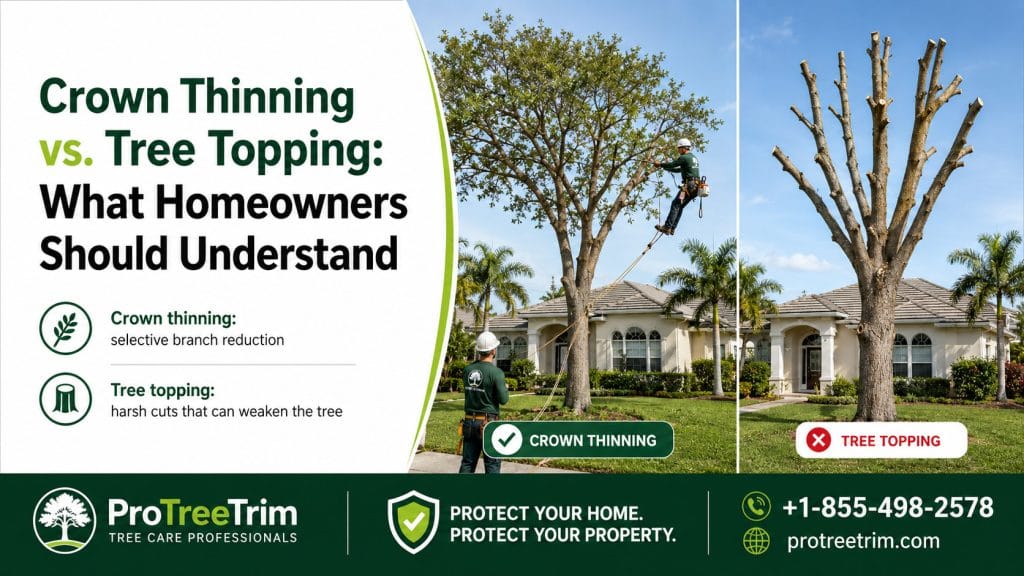
Crown thinning and tree topping are very different. Crown thinning is selective pruning with a purpose. Tree topping is a harsh cutback that removes large parts of the canopy or main branches. If a tree feels too dense, too tall, or too close to the roof, homeowners should understand the difference before approving work.
Continue reading Crown Thinning vs. Tree Topping: What Homeowners Should UnderstandGuides
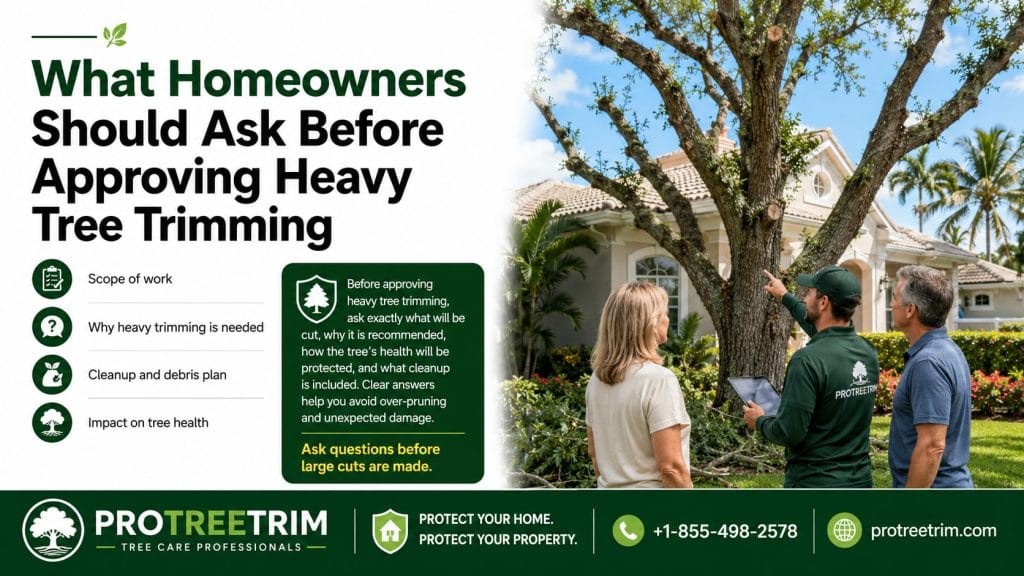
What Homeowners Should Ask Before Approving Heavy Tree Trimming
Heavy tree trimming should never be approved with a vague “cut it back” instruction. Before work starts, homeowners should understand which limbs are being removed, why those cuts are needed, how much live canopy will come off, and whether the crew has a plan for roofs, driveways, fences, pavers, pool cages, and irrigation.
Continue reading What Homeowners Should Ask Before Approving Heavy Tree Trimming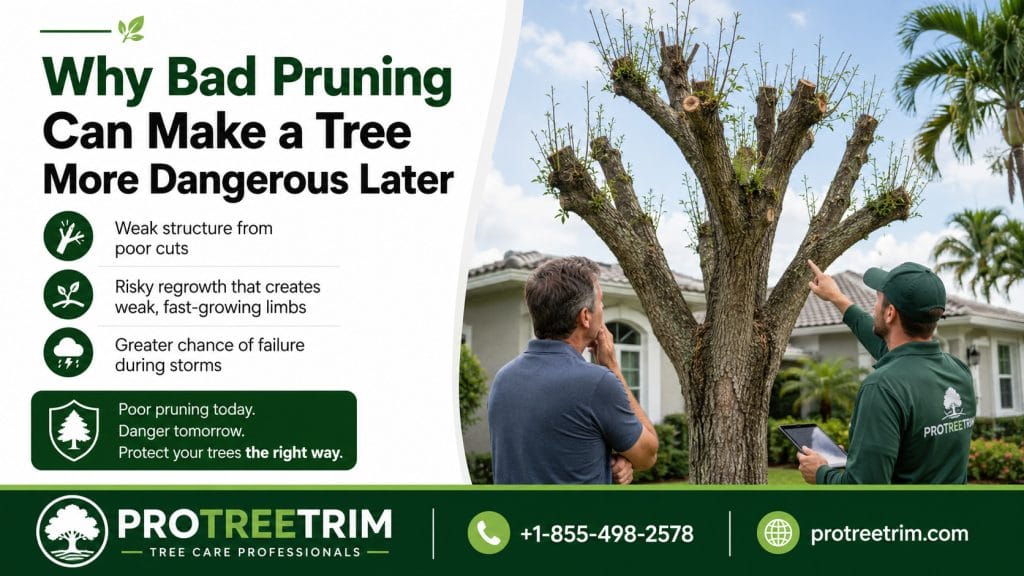
Why Bad Pruning Can Make a Tree More Dangerous Later
Bad pruning does not always look bad on day one. A tree may look shorter, cleaner, or “opened up” right after the work is done. The real problems often show up later: weak regrowth, large decay-prone cuts, unbalanced limbs, sun-exposed bark, or branches that fail during wind and rain.
Continue reading Why Bad Pruning Can Make a Tree More Dangerous Later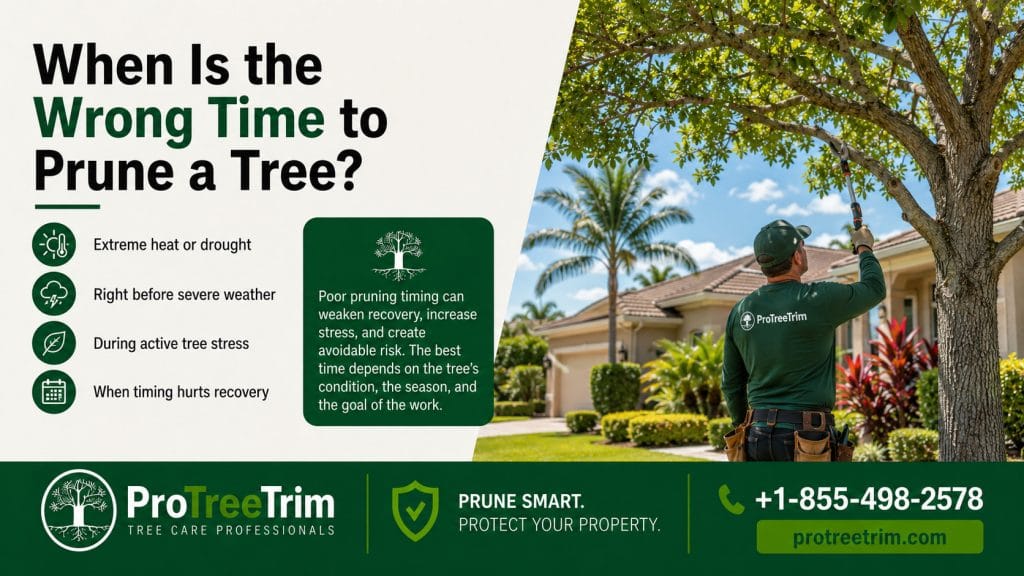
When Is the Wrong Time to Prune a Tree?
The wrong time to prune a tree is usually when the tree is already stressed, the weather is unsafe, a storm is close, or the cut has no clear purpose. Homeowners often think pruning is always helpful, but a careless cut can remove healthy foliage, open unnecessary wounds, or make a tree harder to manage later.
Continue reading When Is the Wrong Time to Prune a Tree?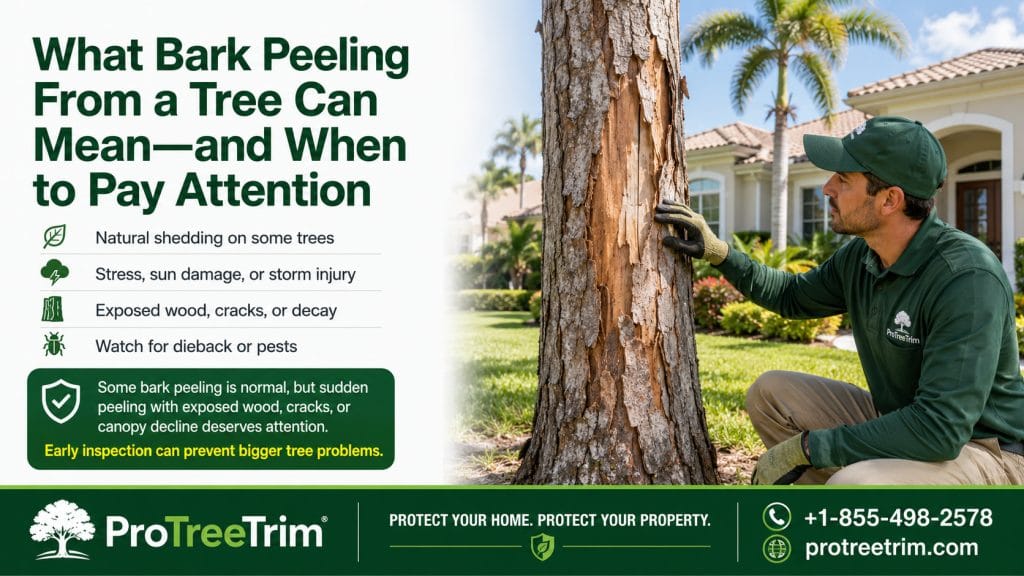
What Bark Peeling From a Tree Can Mean—and When to Pay Attention
Bark peeling from a tree is not always a sign of trouble. Some trees naturally shed outer bark as they grow. The concern starts when peeling is fresh, deep, spreading, wet-looking, accompanied by cracks, or occurring near dead branches, trunk wounds, insects, mushrooms, or a sudden change in the canopy.
Continue reading What Bark Peeling From a Tree Can Mean—and When to Pay Attention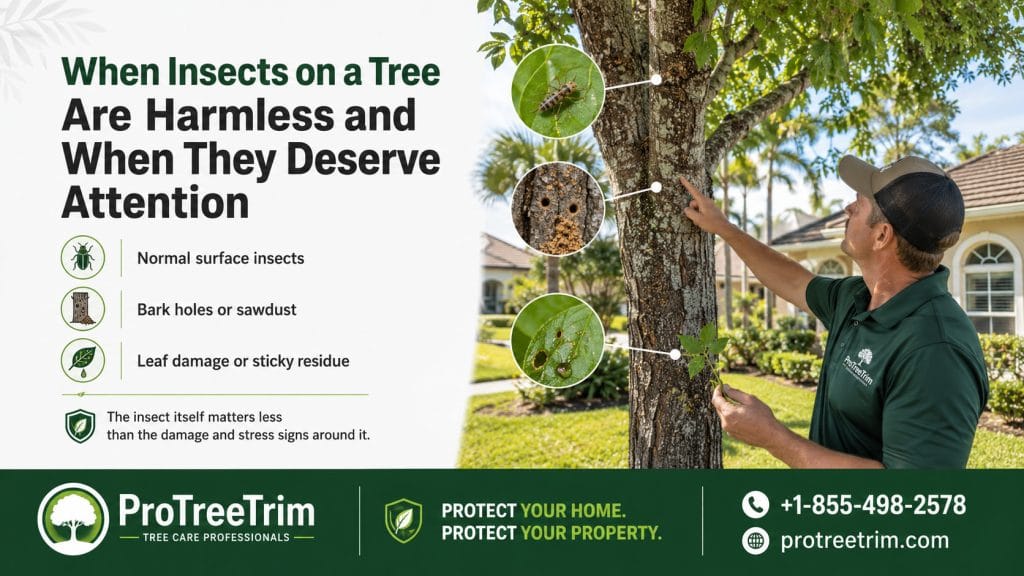
When Insects on a Tree Are Harmless and When They Deserve Attention
Seeing insects on a tree does not automatically mean the tree is in trouble. Many bugs are simply passing through, feeding on other pests, pollinating, or living in nearby mulch. The concern grows when insects appear with leaf damage, sticky residue, bark holes, sawdust-like material, branch dieback, or a tree that is already stressed.
Continue reading When Insects on a Tree Are Harmless and When They Deserve Attention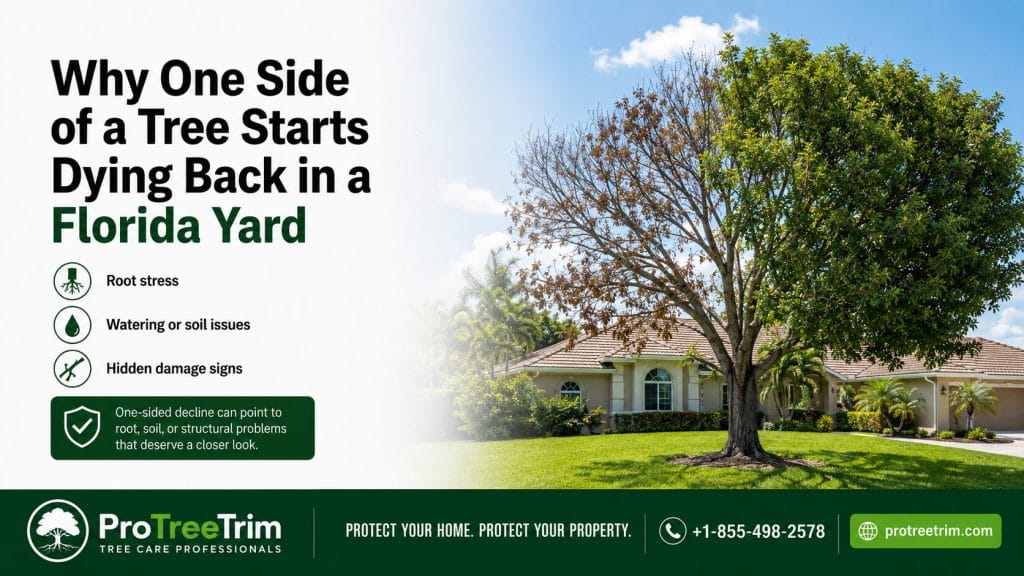
Why One Side of a Tree Starts Dying Back in a Florida Yard
When one side of a tree starts dying back, the problem may be above ground, below ground, or both. In Florida yards, uneven canopy loss can follow root damage, drainage changes, drought stress, construction, pruning wounds, storms, or disease. The important step is not guessing the cause too quickly. Look at what changed around that side of the tree.
Continue reading Why One Side of a Tree Starts Dying Back in a Florida Yard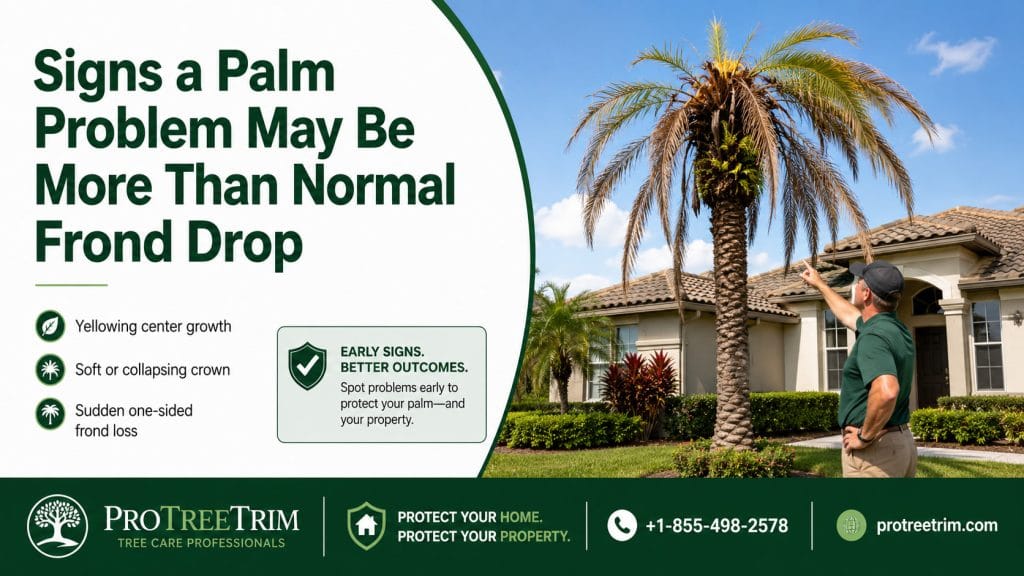
Signs a Palm Problem May Be More Than Normal Frond Drop
Palm fronds fall in Florida yards all the time. One brown frond on the lawn is usually not a crisis. The concern starts when fronds drop frequently, green fronds fall suddenly, the crown looks weak, the trunk shows damage, or the palm begins to lean after rain or wind. Normal shedding is one thing. Patterned decline is another.
Continue reading Signs a Palm Problem May Be More Than Normal Frond Drop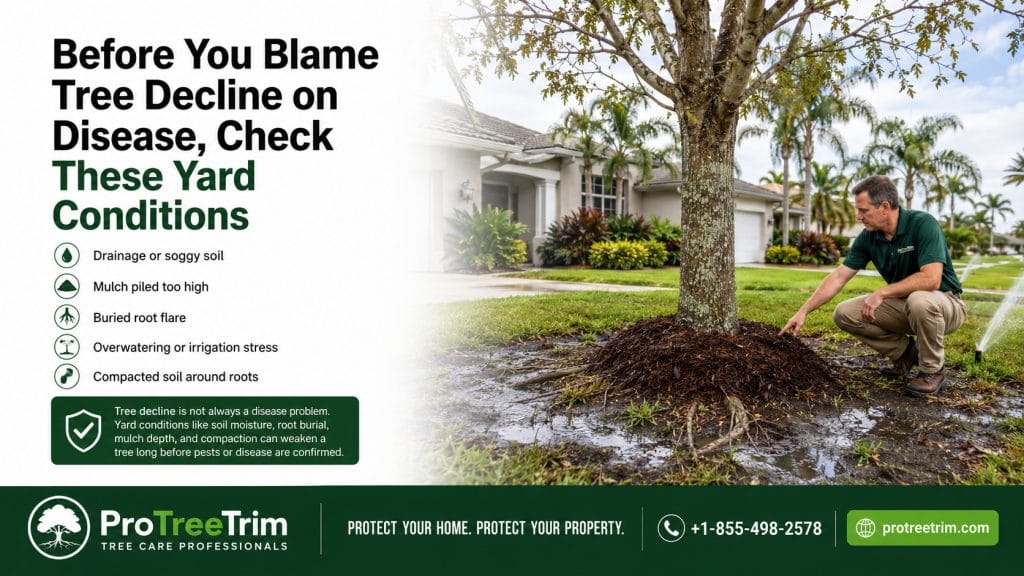
Before You Blame Tree Decline on Disease, Check These Yard Conditions
A tree that looks thin, tired, or uneven is not automatically diseased. Many yard trees decline due to root stress, poor drainage, drought, overwatering, mulch buildup, construction damage, poor pruning, or storm damage. Disease may be part of the picture, but it should not be the first guess before the site conditions are checked.
Continue reading Before You Blame Tree Decline on Disease, Check These Yard Conditions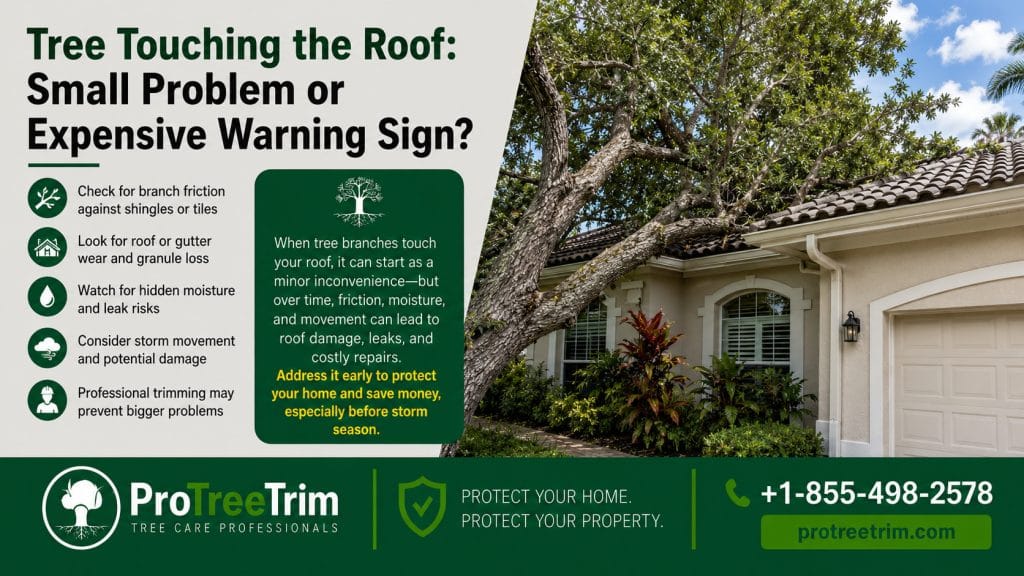
Tree Touching the Roof: Small Problem or Expensive Warning Sign?
A tree touching the roof may seem minor at first, especially if it is only a few leaves or small twigs. But in Florida, roof contact can become a bigger issue during wind, heavy rain, and storm season. Homeowners should check whether branches are rubbing shingles, blocking gutters, scraping fascia, dropping debris, or adding weight near vulnerable roof edges.
Continue reading Tree Touching the Roof: Small Problem or Expensive Warning Sign?