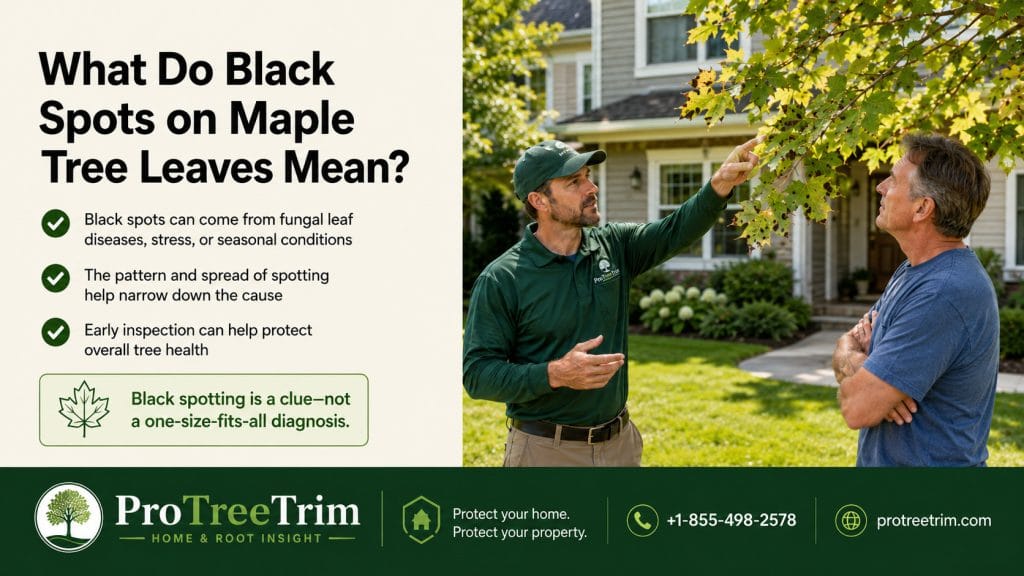
Black spots on maple leaves can look serious, especially when they spread across the canopy or make the tree look diseased. In many cases, black spots on maple leaves are more of a leaf-level or cosmetic issue than an immediate tree-risk problem. But homeowners should still look at the whole tree before deciding it is harmless.
Continue reading What Do Black Spots on Maple Tree Leaves Mean?Guides
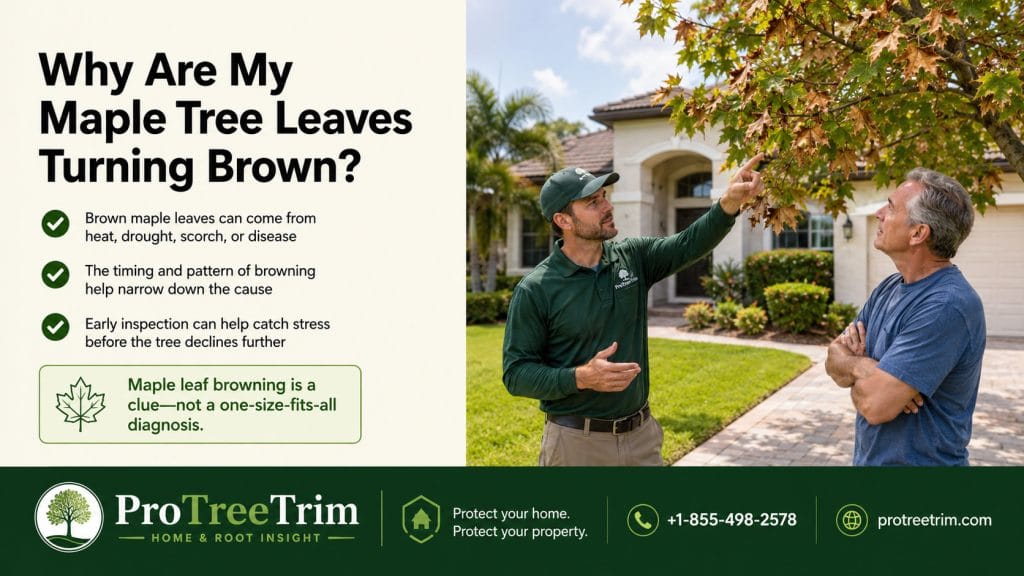
Why Are My Maple Tree Leaves Turning Brown?
Maple tree leaves can turn brown for many reasons. Sometimes the problem is heat, drought, or normal seasonal stress. Other times, browning can point to leaf scorch, poor watering, compacted soil, root damage, girdling roots, pests, fungal leaf spots, construction injury, or broader decline.
Continue reading Why Are My Maple Tree Leaves Turning Brown?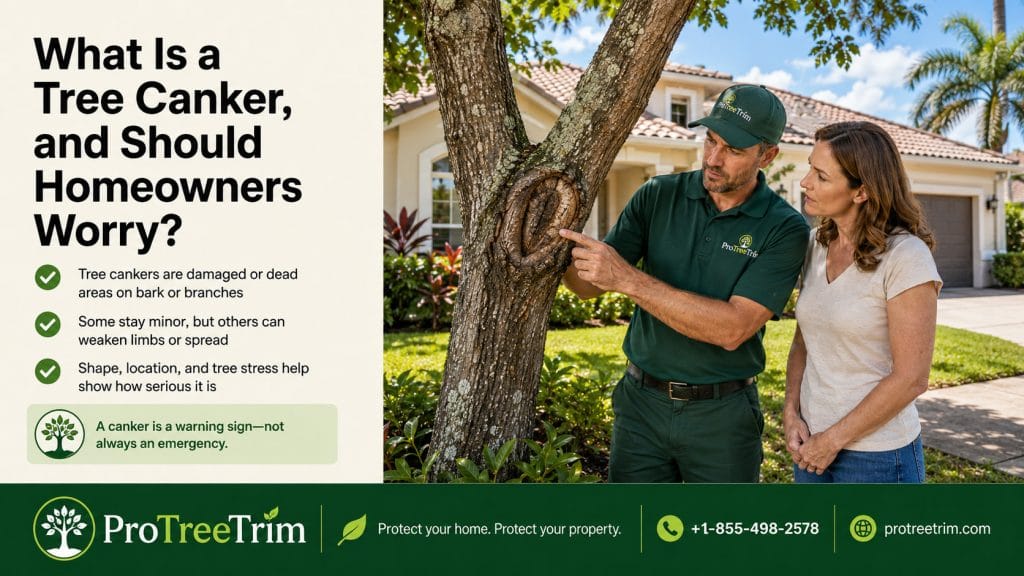
What Is a Tree Canker, and Should Homeowners Worry?
A tree canker is an area of dead, damaged, or diseased bark and underlying tissue on a trunk, branch, or stem. To homeowners, it may look like a sunken patch, cracked bark, an oozing wound, a dark stain, peeling bark, or a dead-looking section on one side of the tree.
Continue reading What Is a Tree Canker, and Should Homeowners Worry?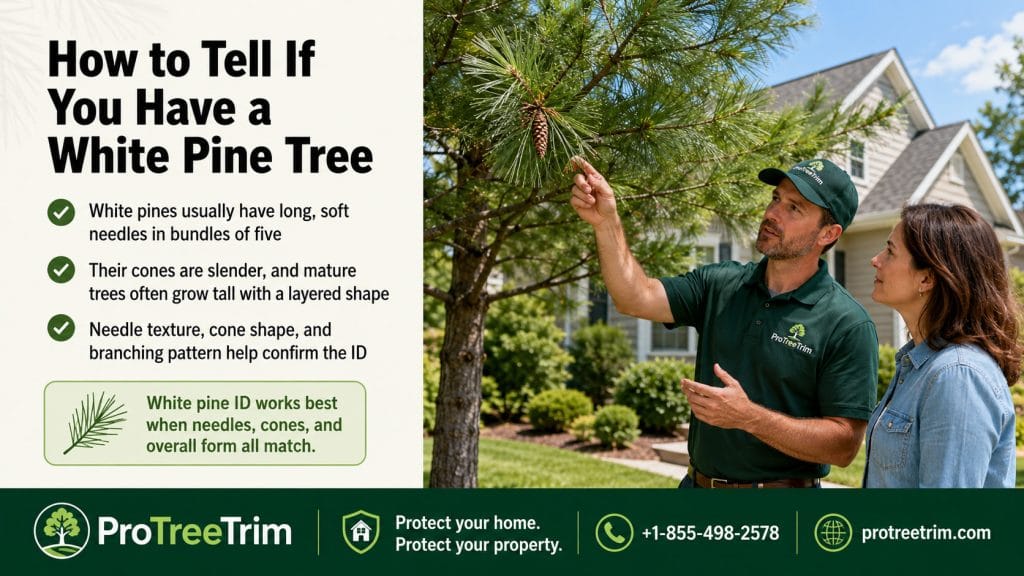
How to Tell If You Have a White Pine Tree
White pine trees are known for their soft-looking needles, graceful branching, and tall evergreen form. They can be beautiful shade and screening trees, but homeowners often do not know they have one until needles start browning, branches drop, cones appear, or the tree begins crowding a roof, driveway, fence, or utility area.
Continue reading How to Tell If You Have a White Pine Tree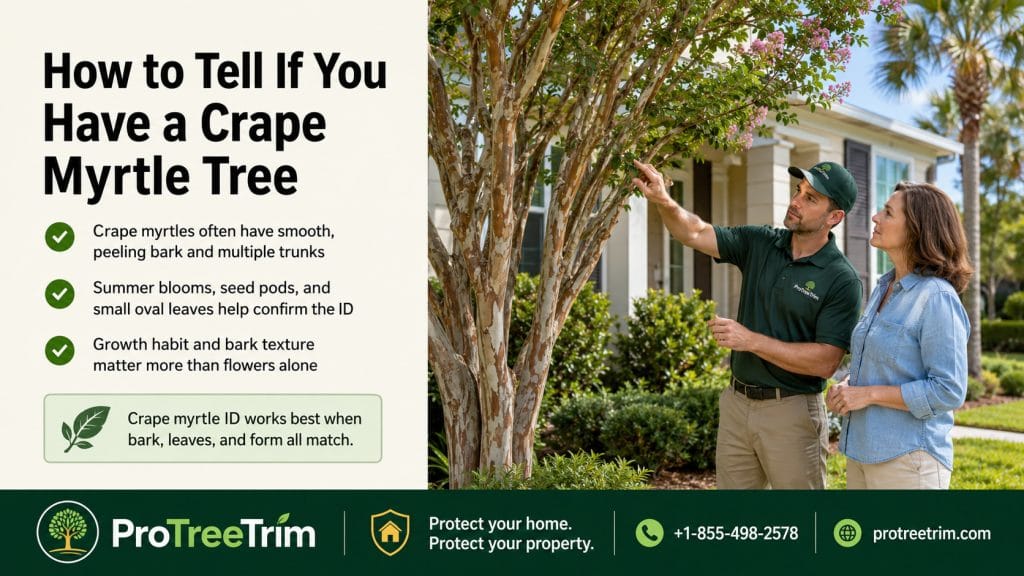
How to Tell If You Have a Crape Myrtle Tree
Crape myrtle, also spelled crepe myrtle, is one of the most recognizable flowering trees in many warm-climate yards. It is known for bright summer flowers, smooth peeling bark, small oval leaves, seed capsules, and often a multi-stem shape. But homeowners do not always know what they have until the tree needs pruning, starts dropping bark, develops black residue, or gets cut back too hard.
Continue reading How to Tell If You Have a Crape Myrtle Tree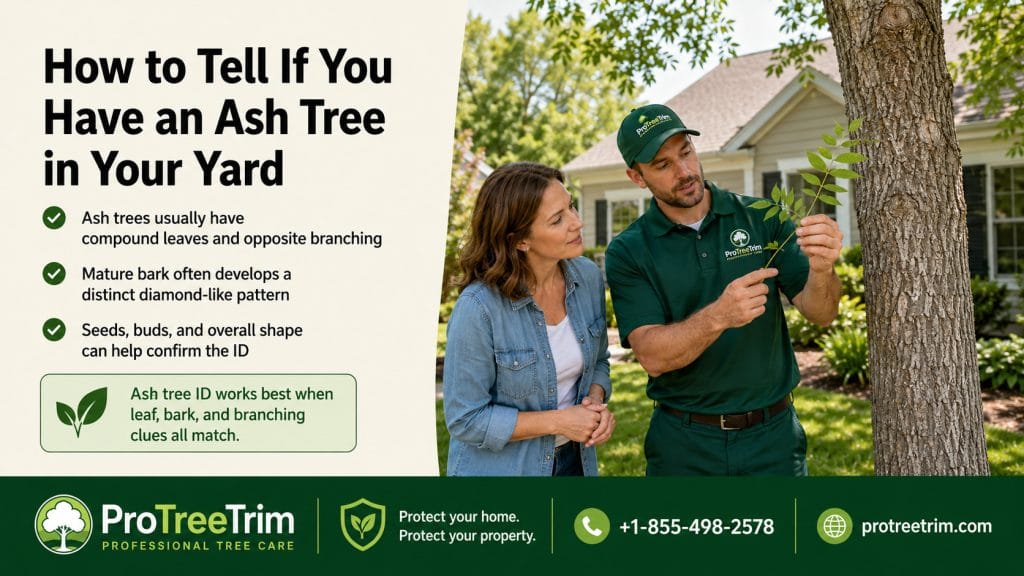
How to Tell If You Have an Ash Tree in Your Yard
Ash trees can be valuable shade trees, but homeowners often do not know they have one until a branch drops, leaves thin out, or an insect problem raises questions. Identifying an ash tree starts with a few simple clues: opposite branching, compound leaves, bark pattern, seed clusters, overall shape, and where the tree is growing.
Continue reading How to Tell If You Have an Ash Tree in Your Yard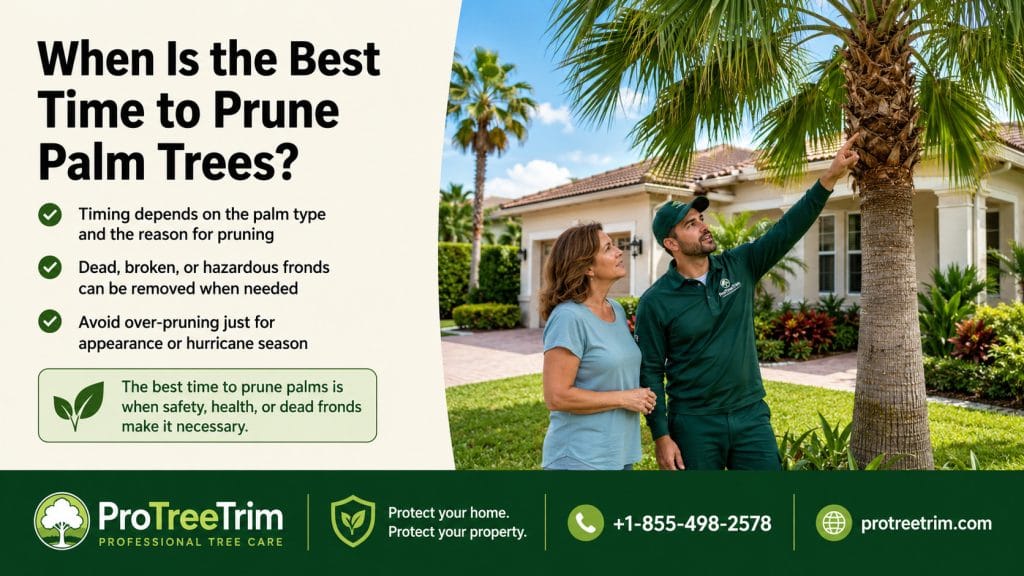
When Is the Best Time to Prune Palm Trees?
The best time to prune palm trees is when there is a clear reason to prune: dead fronds, broken fronds, seed pods, roofline contact, pool cage contact, driveway hazards, or storm-damaged material. Palm pruning should not be done simply because the crown looks full or because storm season is approaching. A healthy palm needs its green fronds.
Continue reading When Is the Best Time to Prune Palm Trees?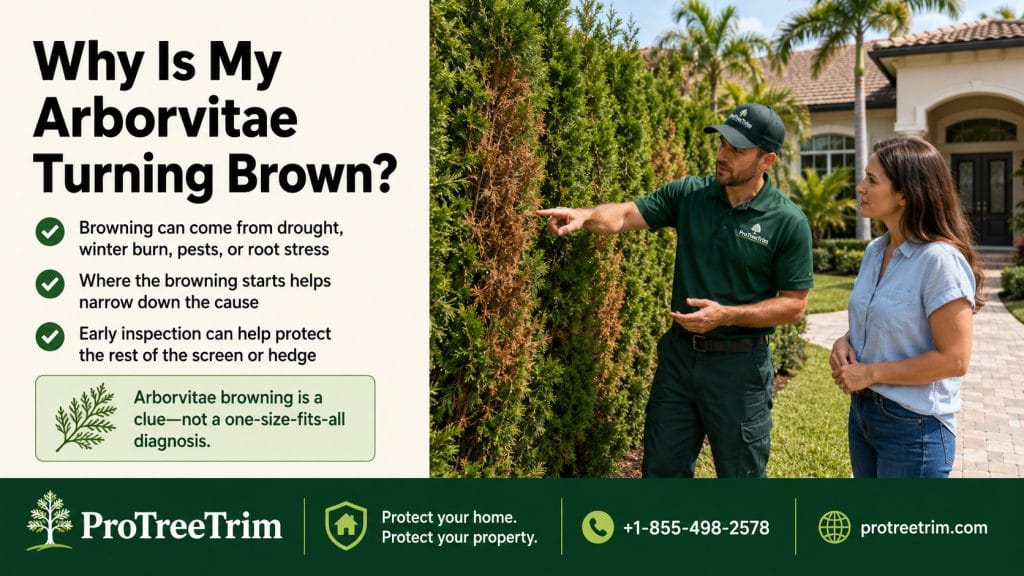
Why Is My Arborvitae Turning Brown?
Arborvitae turning brown can worry homeowners because these evergreens are often planted for privacy, screening, and curb appeal. When one tree in a row starts browning, the whole landscape can look damaged. Sometimes the browning is normal interior shedding. Other times it may point to drought stress, overwatering, poor drainage, pests, winter injury, root damage, crowding, or a planting problem.
Continue reading Why Is My Arborvitae Turning Brown?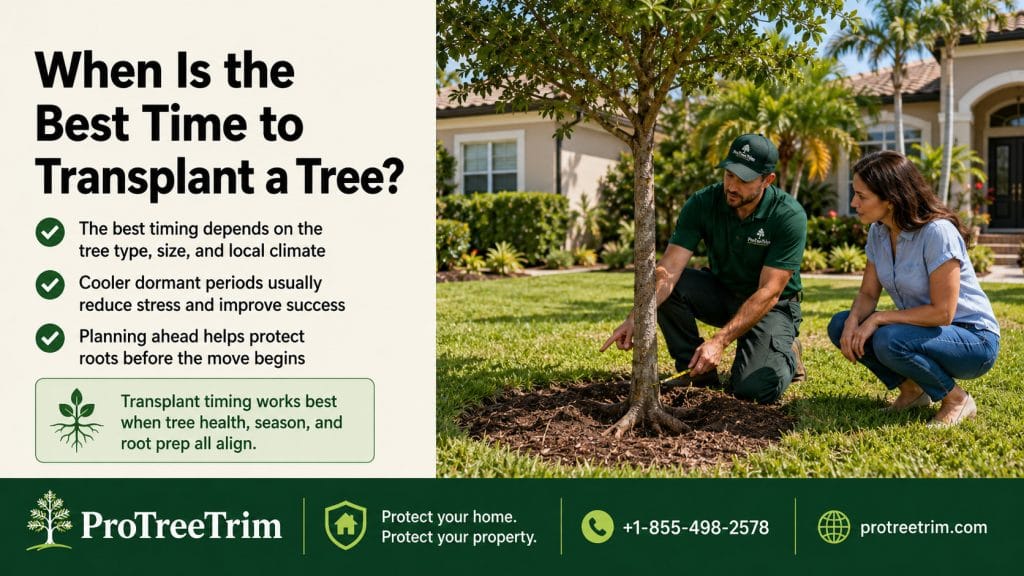
When Is the Best Time to Transplant a Tree?
The best time to transplant a tree is usually when the tree is not under heavy heat, drought, active growth, or storm stress. For many deciduous trees, that often means the cooler dormant season. For many evergreens and palms, timing depends more carefully on local climate, soil moisture, root handling, and the tree’s ability to recover.
Continue reading When Is the Best Time to Transplant a Tree?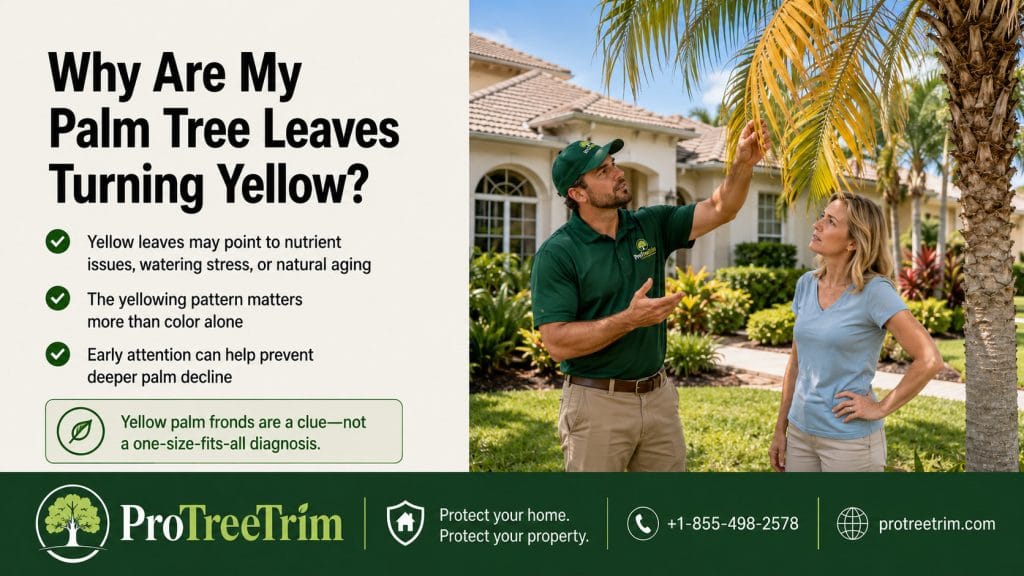
Why Are My Palm Tree Leaves Turning Yellow?
Palm leaves can turn yellow for many reasons. Sometimes it is normal aging. Older lower fronds naturally yellow, brown, and drop as new growth develops. Other times, yellowing can point to watering problems, poor drainage, nutrient stress, pests, root damage, cold injury, over-pruning, or a deeper palm health issue.
Continue reading Why Are My Palm Tree Leaves Turning Yellow?