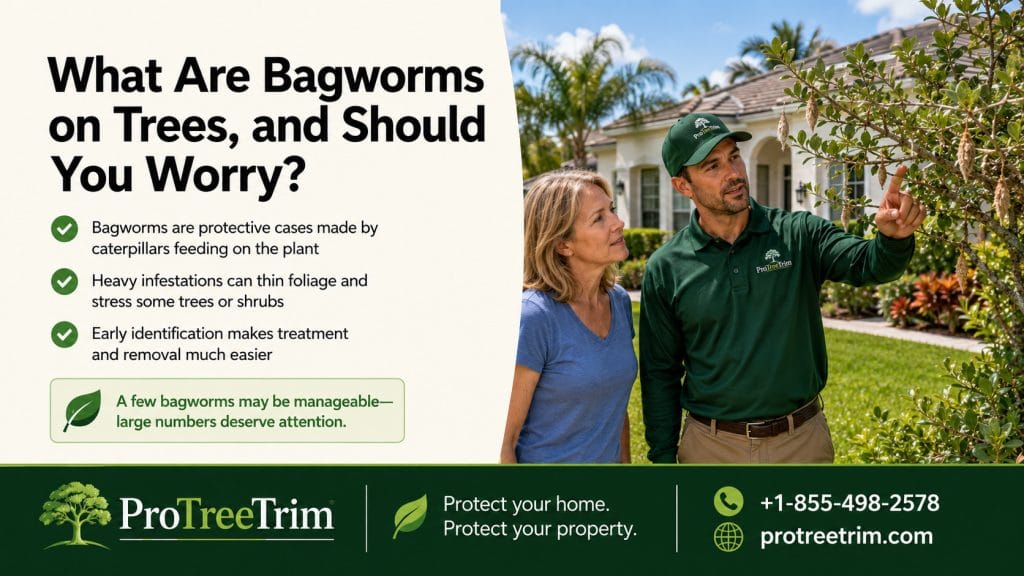
Bagworms are small caterpillars that live inside protective bags made from silk, leaves, needles, bark pieces, and plant debris. They often look like tiny hanging cones or rough brown ornaments attached to branches. A few may go unnoticed. A heavy infestation can strip foliage, stress trees, and make evergreens look thin, brown, or patchy.
What Bagworms Look Like
Bagworms are easy to miss because their bags blend into the tree. On evergreens, the bags may look like small cones. On leafy trees, they may look like dried leaf bundles hanging from twigs.
Homeowners often notice them only after the tree starts looking thin or brown.
| What you see | What it may suggest |
|---|---|
| Small cone-like bags hanging from branches | Possible bagworms |
| Brown bundles attached to twigs | Old or active bagworm cases |
| Needles disappearing on evergreen branches | Feeding damage may be occurring |
| Patchy brown sections | Bagworms or other stress may be involved |
| Bags clustered on one side | Infestation may be spreading locally |
| Many bags across the tree | Higher risk of visible damage |
| Dead-looking branch tips | Tree stress or defoliation may be involved |
The “bag” is the clue. If you see many of them, do not ignore them.
Bagworms Can Damage Trees by Eating Foliage
Bagworms feed on leaves or needles while protected inside their bags. As they grow, the bags get larger and easier to see. The damage may start small, then become obvious when branches look thin or brown.
Evergreens can be especially vulnerable because they may not replace lost needles as easily as some deciduous trees replace leaves. A heavily defoliated evergreen may have a harder time recovering, especially if it was already stressed by drought, poor drainage, root damage, or bad planting conditions.
A healthy mature tree may tolerate light feeding. A young, stressed, or heavily infested tree may not.
Evergreens Deserve Extra Attention
Bagworms are often noticed on arborvitae, juniper, cedar-like evergreens, spruce, pine, and other dense plants. They can also appear on deciduous trees, but homeowners usually worry most when evergreens turn brown or patchy.
With evergreens, the concern is visual and functional. A privacy screen, foundation planting, or front-yard evergreen can look damaged quickly.
Pay closer attention if bagworms are on:
- privacy trees
- front-entry evergreens
- young trees
- newly planted trees
- trees near driveways or walkways
- trees already browning from heat or drought
- trees planted in narrow, dry, or compacted beds
- evergreens used to screen a neighbor or road
A few bags on a large tree may be manageable. Many bags on a small evergreen screen can become a bigger problem.
Do Not Confuse Bagworms With Normal Cones
This is a common mistake. Bagworm cases can look like small cones, especially on evergreen branches. The difference is that bagworm bags are often made of bits of plant material and may hang in unusual places along twigs.
Look closely. A bagworm case may feel like a rough little pouch attached to the branch. Some may move slightly when active. Old bags can remain after the insect is gone, which can make it harder to tell whether the issue is current or past.
If you are unsure, take close-up photos of the bags and a full photo of the tree.
Small Infestations May Be Handled Early
When bagworms are few and reachable, homeowners may sometimes remove them by hand. This is most practical on small shrubs, young trees, or low branches where the bags can be reached safely from the ground.
Hand removal works best before the problem spreads.
A careful approach:
- remove visible bags from reachable branches
- drop them into a sealed bag
- do not leave removed bags under the tree
- inspect nearby trees and shrubs
- recheck the plant in a few weeks
- avoid breaking healthy branches while pulling bags
- do not climb or use unsafe ladders for high branches
If the tree is tall, heavily infested, or near structures, professional help may be safer and more effective.
Timing Matters
Bagworm control depends heavily on timing. Once the caterpillars are larger and protected inside tougher bags, simple treatment becomes harder. Old bags may remain visible even after the active feeding period has passed.
That is why early detection is valuable. Homeowners who wait until a tree is visibly brown may be dealing with damage that already happened.
Watch for bagworms during active growing periods, especially if the same trees had them before.
Do Not Spray Randomly Without Identifying the Problem
Brown evergreens can be caused by many things: drought, too much water, root damage, spider mites, bagworms, planting depth, soil compaction, road salt in some regions, or pruning damage. Spraying without identifying the issue can waste money and miss the real cause.
Before treatment, confirm:
- Are bagworm bags present?
- Are they current or old?
- Is foliage being eaten?
- Is the tree young or mature?
- Is the damage light or heavy?
- Are nearby trees affected?
- Is the tree already stressed by water or roots?
- Is the affected area reachable?
The right response depends on the actual pest and the tree’s condition.
Bagworms Can Spread Across Nearby Plants
If one tree has bagworms, nearby susceptible trees and shrubs may also have them. Check the surrounding landscape, especially evergreens in the same bed or along the same fence line.
Look at:
- arborvitae-style privacy rows
- junipers
- small pines
- cedars
- foundation shrubs
- young ornamentals
- trees near the infected plant
- neighbor-facing fence-line plantings
Catching a few bags early on several plants is much easier than dealing with a full row of damaged evergreens later.
Bagworms on Trees Near the House
Bagworms are usually a plant-health issue, not a direct house problem. But the location still matters. If bagworms damage a tree near the house, driveway, walkway, AC unit, pool cage, or fence, the visible decline may create other maintenance concerns.
A browning privacy tree near a fence may become an appearance issue. A declining evergreen near a walkway may create dead branches. A stressed tree beside an AC unit may drop needles and debris into a service area.
Tree condition and placement should be considered together.
When Brown Branches May Not Recover
If bagworms have stripped evergreen foliage from a branch, that section may not always refill the way homeowners hope. Some evergreens do not push new growth from older bare wood easily.
That means early action matters. Waiting until the plant is mostly brown can leave permanent bare areas or make removal more likely.
Before deciding, check:
- how much green foliage remains
- whether damage is limited to branch tips
- whether the trunk and main branches are still alive
- whether the tree was already stressed
- whether new growth is appearing
- whether the tree still serves its purpose
- whether replacement may be more practical
Sometimes recovery is possible. Sometimes the tree remains thin or patchy.
Bagworms and Stressed Trees
Trees under stress may be less able to tolerate feeding damage. A bagworm problem on a healthy tree is different from a bagworm problem on a tree that is already struggling.
Stress can come from:
- drought
- overwatering
- poor drainage
- soil compaction
- root damage
- planting too deep
- too much mulch
- construction or paver work
- heat reflected from pavement
- crowding from other plants
- repeated pruning
If the tree is already stressed, pest damage can push it further into decline.
What Homeowners Should Photograph
Good photos help track whether bagworms are active and whether damage is spreading.
Photograph:
- close-up bags on branches
- full tree from several angles
- brown or thin sections
- nearby trees and shrubs
- base of the tree and mulch level
- irrigation pattern if visible
- any root or soil issues
- branches over walkways, fences, or structures
Photos also help avoid confusing bagworms with cones, leaf debris, or another pest.
When to Get Help
Professional help makes sense when the tree is tall, heavily infested, already browning, or part of a larger privacy screen or high-value landscape.
Also get help if:
- bags are high in the canopy
- many nearby plants are affected
- the tree is young and losing foliage quickly
- the tree is near a roof, driveway, walkway, or pool area
- you are unsure whether bags are active
- the tree has other signs of decline
- prior treatments did not work
- removal may be needed if the tree is too damaged
A small bagworm problem may be manageable. A heavy infestation on important landscape trees should not be ignored.
What Not to Do
Do not top, shear, or heavily prune a tree just because bagworms are present. Removing too much healthy foliage can add stress.
Avoid:
- cutting large healthy branches unnecessarily
- using random pest sprays without identification
- leaving removed bags under the tree
- assuming brown evergreen branches will always recover
- ignoring nearby plants
- climbing unsafe ladders to reach high bags
- treating pest damage while ignoring water or root stress
A good response is targeted, not panicked.
Final Homeowner Takeaway
Bagworms can look harmless when there are only a few bags, but they can damage trees when they feed heavily, especially on evergreens, young trees, privacy screens, and stressed plants.
Start by identifying the bags, checking how much foliage is affected, and looking at nearby trees. Remove small reachable infestations early when practical. Get help when the infestation is heavy, high, spreading, or paired with tree decline.
If you are unsure whether the hanging bags on your tree are bagworms, old debris, cones, or part of a larger tree-health issue, ProTreeTrim can help connect homeowners with local tree service support. Call +1-855-498-2578 or visit protreetrim.com.
FAQs
What do bagworms look like on trees?
They often look like small hanging cones or rough brown bags made from plant debris, attached to twigs or branches.
Are bagworms harmful to trees?
They can be. Light infestations may be mostly cosmetic, but heavy feeding can defoliate trees and seriously stress evergreens or young trees.
Can I remove bagworms by hand?
Yes, if they are few and reachable from the ground. Remove the bags and dispose of them instead of dropping them under the tree.
Why is my evergreen turning brown with little bags on it?
Bagworms may be feeding on the foliage. Brown evergreen sections may not always recover, so early identification and action matter.
ProTreeTrim™ can help you take the next step.
If you are dealing with a damaged tree, fallen branch, stump, root issue, palm concern, or storm cleanup question in Florida, call ProTreeTrim for tree service support.