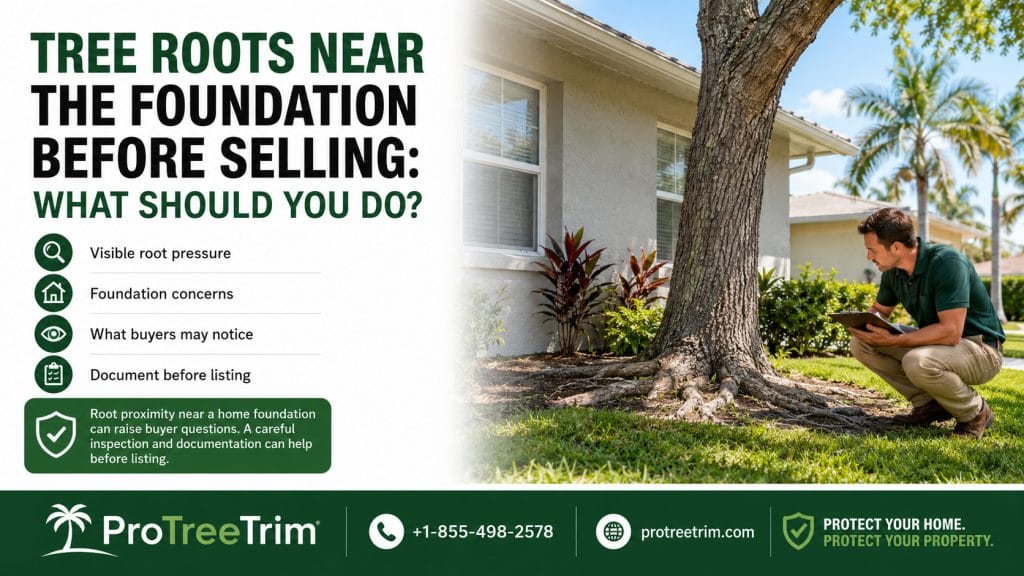
Tree roots near the foundation can make buyers nervous, even when the tree is not actually damaging the house. The smart move before selling is not to panic-remove the tree or cut roots blindly. Start by checking visible signs: cracks, drainage, pavers, soil movement, root exposure, roof contact, and whether the tree is creating a real maintenance or safety concern.
Roots Near the House Are Not Always Foundation Damage
A tree growing close to the house does not automatically mean the foundation is being damaged. Roots often follow moisture, loose soil, irrigation patterns, and available oxygen. In many yards, the first visible problems show up in nearby hardscape, not the foundation itself: lifted pavers, cracked walkways, uneven driveway edges, or landscape beds that stay wet.
That said, buyers may not see the difference right away. They may notice roots near the wall and assume the worst. Before listing, your job is to separate appearance from actual concern.
| What you see | What it may mean before selling |
|---|---|
| Roots visible near the wall | May be normal surface roots or erosion |
| Pavers lifted near the house | Root pressure, settling, or base failure may be involved |
| Water pooling near foundation | Drainage should be checked before blaming roots |
| Mulch piled against the wall or trunk | Moisture and inspection visibility concerns |
| Tree leaning toward the house | Buyer concern rises, especially if lean is new |
| Cracks in walkway or stucco | Could have several causes; document and evaluate carefully |
| Large limb over roofline | Separate pruning or clearance issue may exist |
Look at Water Before You Blame the Tree
Moisture is often the missing part of the story. A tree near a foundation may be blamed for a problem that is really tied to drainage, irrigation, grading, or hardscape movement.
Walk the area after rain or irrigation. Does water drain away from the house, or does it collect in the bed? Is a sprinkler head hitting the trunk or wall every day? Does mulch stay wet against the foundation? Is the soil washing away and exposing roots?
If water is moving toward the house, fixing drainage may matter more than removing the tree. If roots are visible because soil has washed away, adding a little mulch may help the bed look cleaner, but burying roots or piling mulch against the trunk can create new problems.
Before listing, take photos from several angles: the full tree, trunk base, root area, wall, pavers, walkway, drainage path, and any visible cracks or lifting. These photos help you understand whether the issue is changing or has looked the same for years.
Do Not Cut Roots Just to Calm Buyer Anxiety
Cutting roots near the foundation can sound like a quick fix. It usually is not.
Large roots close to the trunk may help support the tree. Cutting them can stress the tree, reduce stability, or create delayed decline. If the tree leans toward the house, driveway, garage, pool cage, fence, or neighbor’s property, root cutting can make the situation more complicated.
For a seller, there is another issue: cutting roots before listing may make the area look cleaner while creating future tree stress that becomes visible later. A buyer may still ask questions, especially if the tree starts dropping leaves, thinning, or leaning after the work.
A better approach is to ask what problem you are actually solving:
- Are roots lifting a walkway buyers will use?
- Are branches touching the roof?
- Is water collecting near the house?
- Is the tree dead, hollow, split, or leaning?
- Is the concern cosmetic, structural, or maintenance-related?
- Would pruning, drainage correction, stump grinding, or hardscape repair solve the visible issue better than root cutting?
When Removal May Be Worth Discussing
Removal may be worth discussing if the tree is too close to the house and also showing other concerns: a new lean, trunk cracks, mushrooms near the base, major dead limbs, repeated root damage to hardscape, or branches pressing into the roofline.
Removal may also make sense if the tree has already become a buyer-facing problem. A tree crowding the front elevation, blocking access, lifting the main walkway, or touching the home may create friction during showings and inspection.
But removal is not the end of the project. If the tree comes down before listing, plan the finish carefully. A stump, exposed roots, loose chips, unsettled soil, or bare patch beside the house can look like unfinished work. Depending on the area, you may need stump grinding, chip removal, clean soil, mulch, sod, paver repair, or drainage adjustment.
Keep Records Instead of Making Big Claims
Avoid telling buyers that roots “are not a problem” or that the foundation “will be fine.” Unless the right professional has evaluated the structure, those claims can create unnecessary risk.
A better seller approach is factual:
- “The roofline branches were trimmed back.”
- “The old stump was ground and the area was leveled.”
- “The lifted walkway section was repaired.”
- “Drainage was corrected along that bed.”
- “The invoice and before-and-after photos are available.”
Good records reduce uncertainty. Save estimates, invoices, photos, repair notes, and any written recommendations. If there are real foundation concerns, involve the appropriate building or structural professional rather than treating it as only a tree-service issue.
If you are unsure whether roots near the foundation, roofline limbs, stump issues, or hardscape damage should be handled before listing your home, ProTreeTrim can help connect homeowners with local tree service support. Call +1-855-498-2578 or visit protreetrim.com.
FAQs
Do tree roots near the foundation always mean damage?
No. Roots near a house may be normal or related to surface soil, irrigation, drainage, or landscape conditions. Visible cracks, movement, or water problems should be evaluated carefully before blaming roots alone.
Should I cut roots before selling my home?
Not without guidance. Cutting large roots near the trunk can stress the tree or affect stability, especially if the tree leans toward the house or driveway.
Will buyers worry about roots near the house?
They might. Visible roots, lifted pavers, roof contact, or a tree crowded against the home can raise questions even if there is no confirmed foundation damage.
Should I remove the tree before listing?
Only if there is a clear reason: poor placement, visible damage, new lean, dead limbs, trunk defects, roof contact, or repeated hardscape problems. Otherwise, pruning, documentation, drainage correction, or hardscape repair may be enough.
ProTreeTrim™ can help you take the next step.
If you are dealing with a damaged tree, fallen branch, stump, root issue, palm concern, or storm cleanup question in Florida, call ProTreeTrim for tree service support.