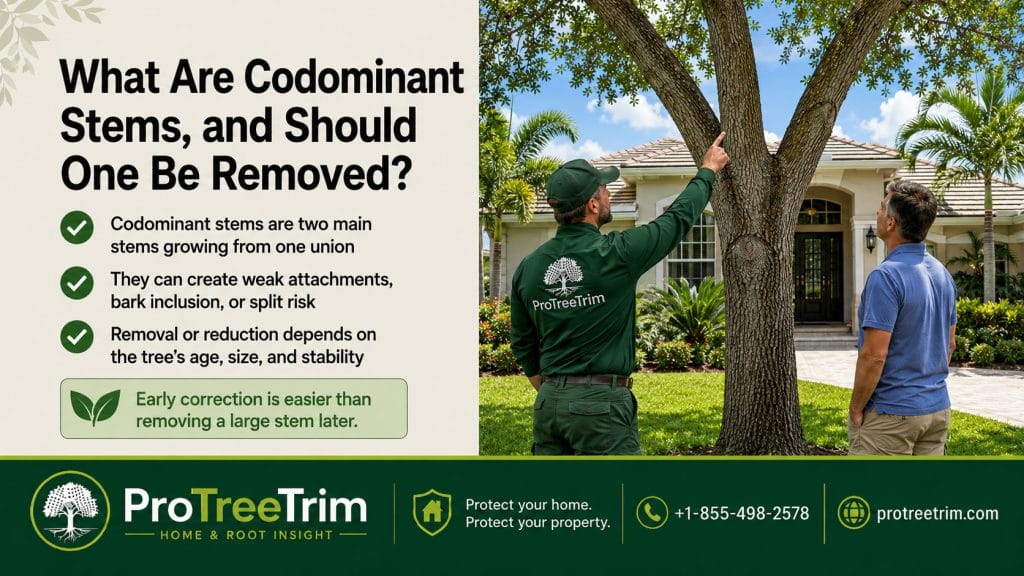
Codominant stems are two or more main stems growing upward from the same area of a tree, often competing to be the central trunk. They are common in many landscape trees. Sometimes they remain stable for years. Other times, they create a weak union that can split during wind, heavy rain, or as the tree gets larger.
Continue reading What Are Codominant Stems, and Should One Be Removed?Category: Tree Care & Pruning Decisions
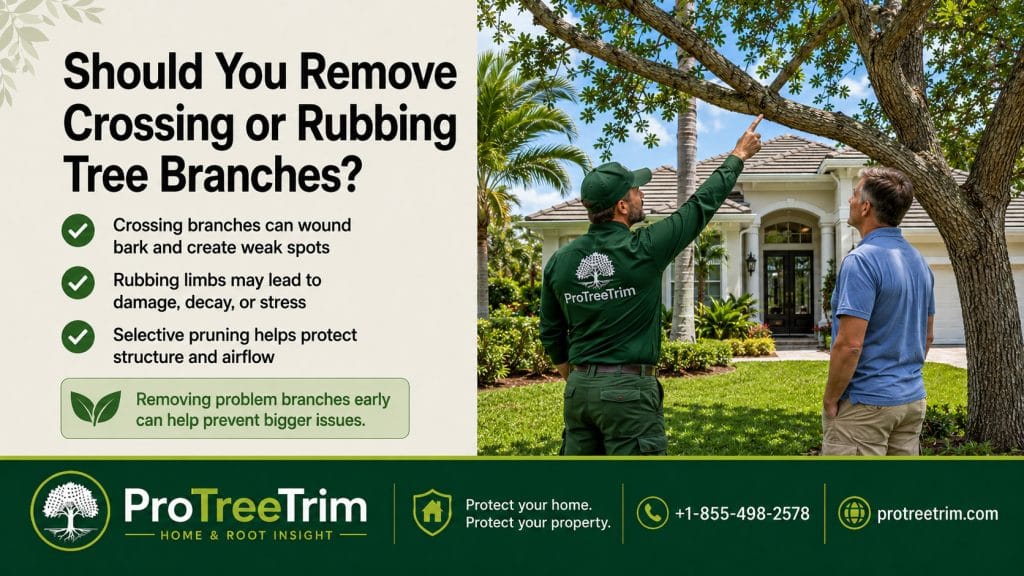
Should You Remove Crossing or Rubbing Tree Branches?
Crossing or rubbing branches are worth paying attention to because they can damage bark, create wounds, and lead to weaker branch structure over time. But that does not mean every crossing branch needs to be cut immediately. The right decision depends on branch size, tree age, location, health, and whether the branches are actually rubbing or just growing near each other.
Continue reading Should You Remove Crossing or Rubbing Tree Branches?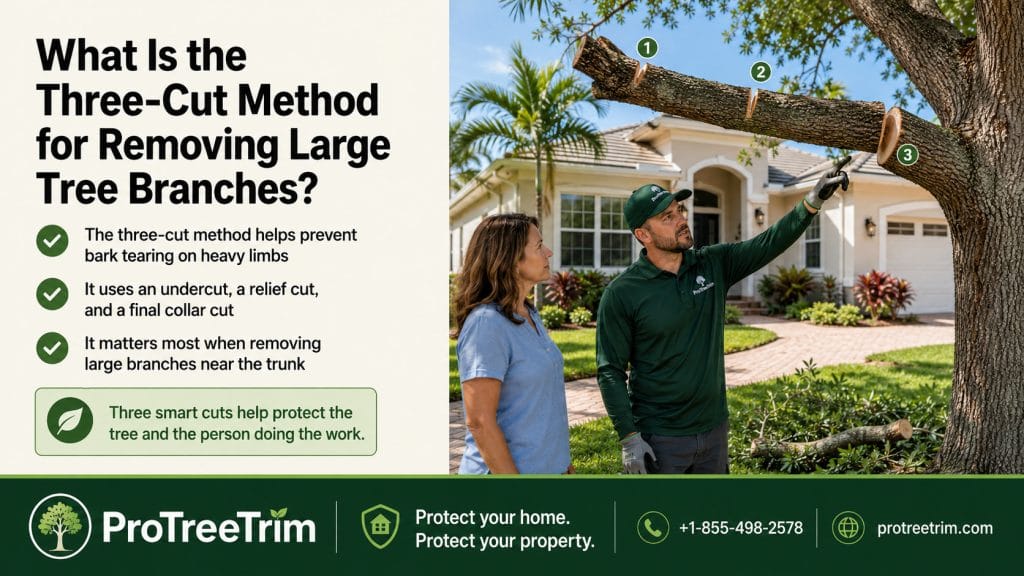
What Is the Three-Cut Method for Removing Large Tree Branches?
The three-cut method is a pruning technique used to remove a large branch without tearing bark down the trunk. It removes the branch’s weight first, then finishes with a clean cut just outside the branch collar. For homeowners, it is useful to understand—but large, high, or risky branches should still be left to a professional crew.
Continue reading What Is the Three-Cut Method for Removing Large Tree Branches?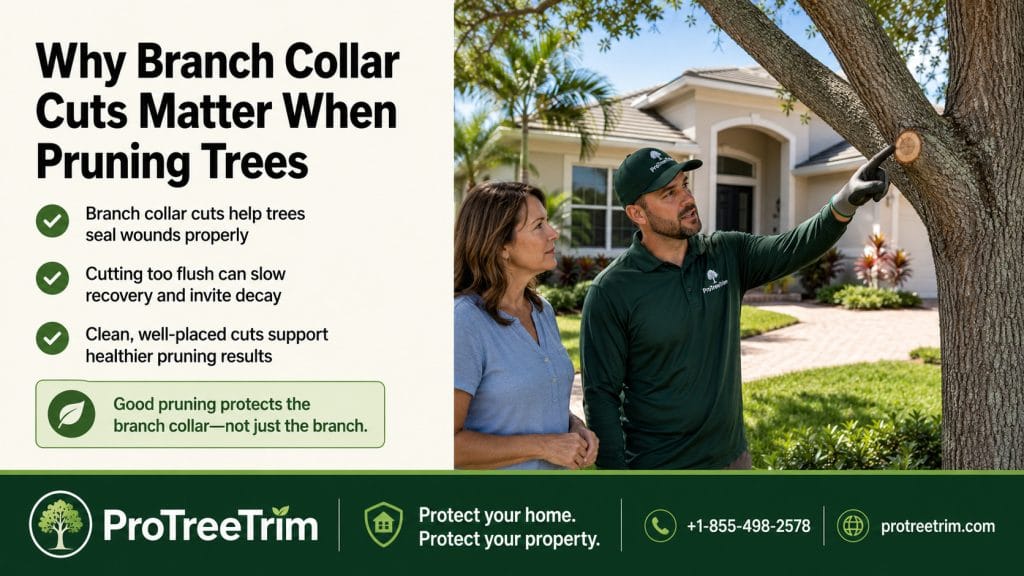
Why Branch Collar Cuts Matter When Pruning Trees
A pruning cut is not just about removing a branch. Where the cut is made can affect how the tree responds for years. Cutting too close to the trunk, leaving a long stub, or tearing bark can turn a simple pruning job into a future wound, decay pocket, or structural concern. That is why the branch collar matters.
Continue reading Why Branch Collar Cuts Matter When Pruning Trees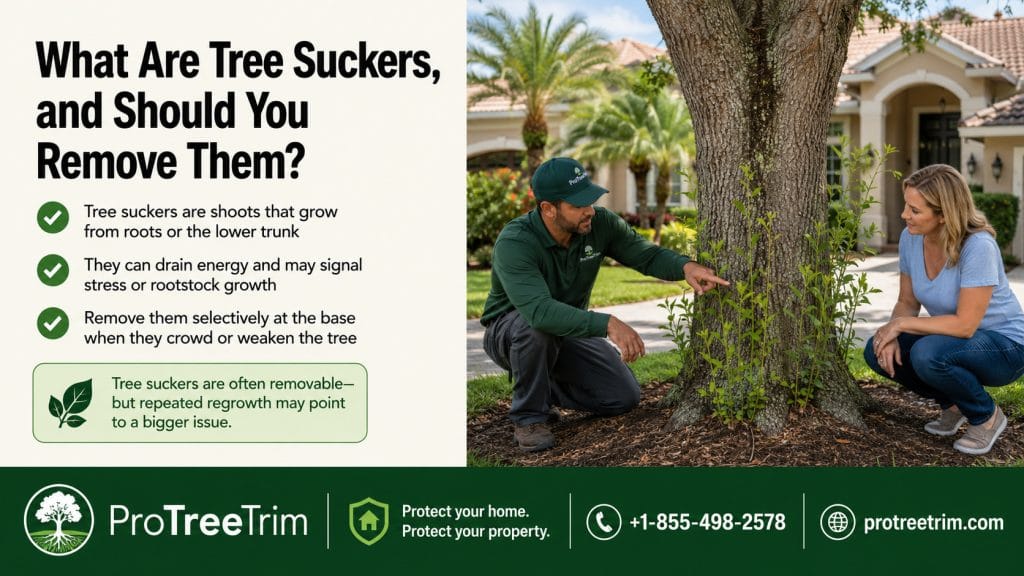
What Are Tree Suckers, and Should You Remove Them?
Tree suckers are fast-growing shoots that often appear from the base of a tree, along surface roots, or low on the trunk. They can make a tree look messy, but they are also a clue. Sometimes suckers are normal for the species. Other times, they show that the tree is stressed, damaged, grafted, over-pruned, or struggling below ground.
Continue reading What Are Tree Suckers, and Should You Remove Them?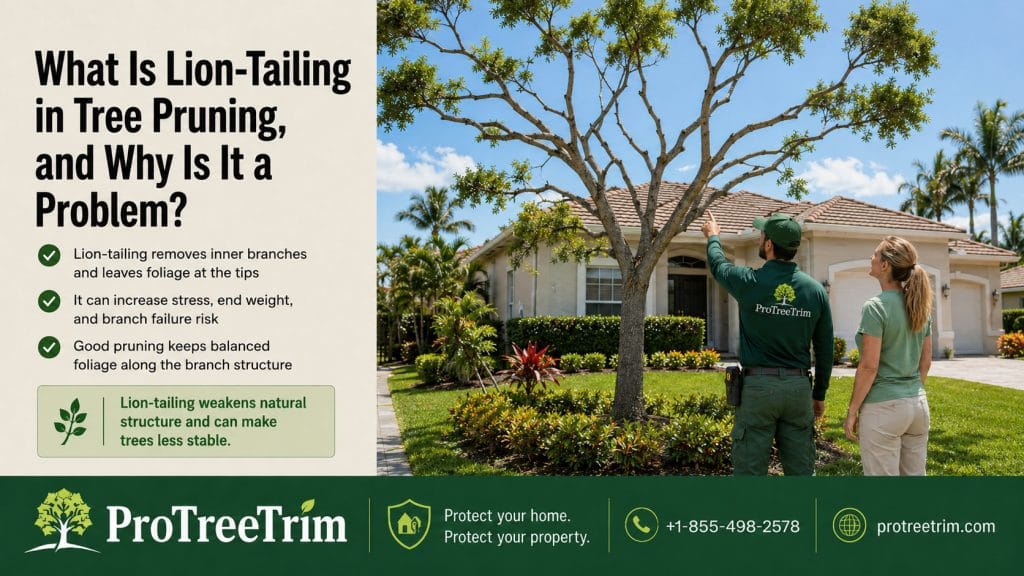
What Is Lion-Tailing in Tree Pruning, and Why Is It a Problem?
Lion-tailing is a poor pruning practice where most of the small interior branches are removed, leaving foliage only at the ends of long limbs. The tree may look “cleaned out” at first, but the result can be weaker structure, more sun exposure, poor weight distribution, and a higher chance of future limb problems.
Continue reading What Is Lion-Tailing in Tree Pruning, and Why Is It a Problem?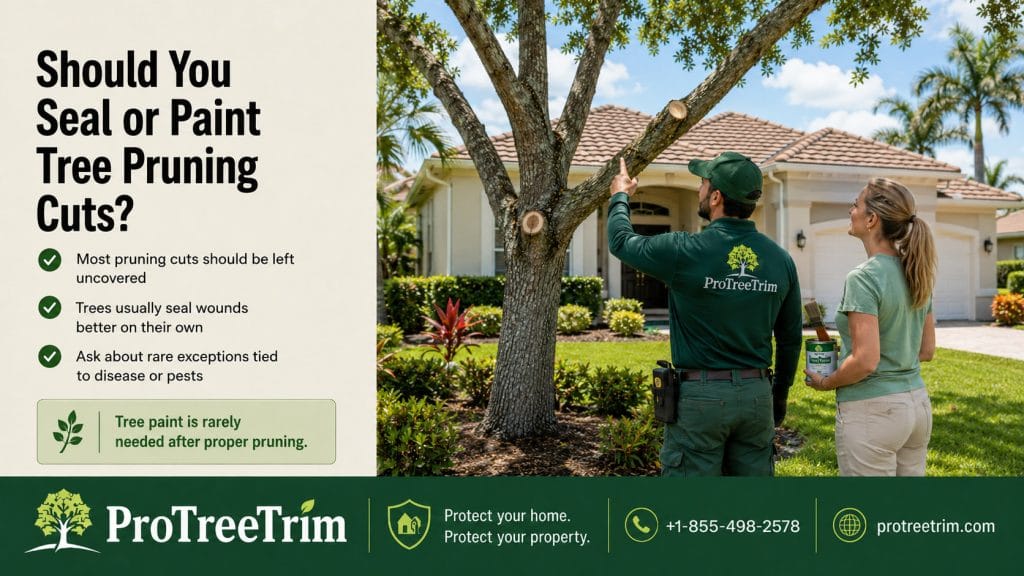
Should You Seal or Paint Tree Pruning Cuts?
In most cases, you should not seal or paint tree pruning cuts. A clean, well-placed cut is usually better than covering the wound with tar, paint, or a thick dressing. Trees do not heal like skin. They grow new wood around wounds and compartmentalize damaged tissue over time. Covering the cut often does less good than homeowners expect.
Continue reading Should You Seal or Paint Tree Pruning Cuts?
What Are Water Sprouts on Trees, and Should You Cut Them?
Water sprouts are fast-growing, upright shoots that often appear on branches, trunks, or near old pruning cuts. They can make a tree look messy, but they are not always the main problem. Sometimes they are a response to stress, over-pruning, storm damage, sun exposure, root trouble, or a sudden change in the tree’s growing conditions.
Continue reading What Are Water Sprouts on Trees, and Should You Cut Them?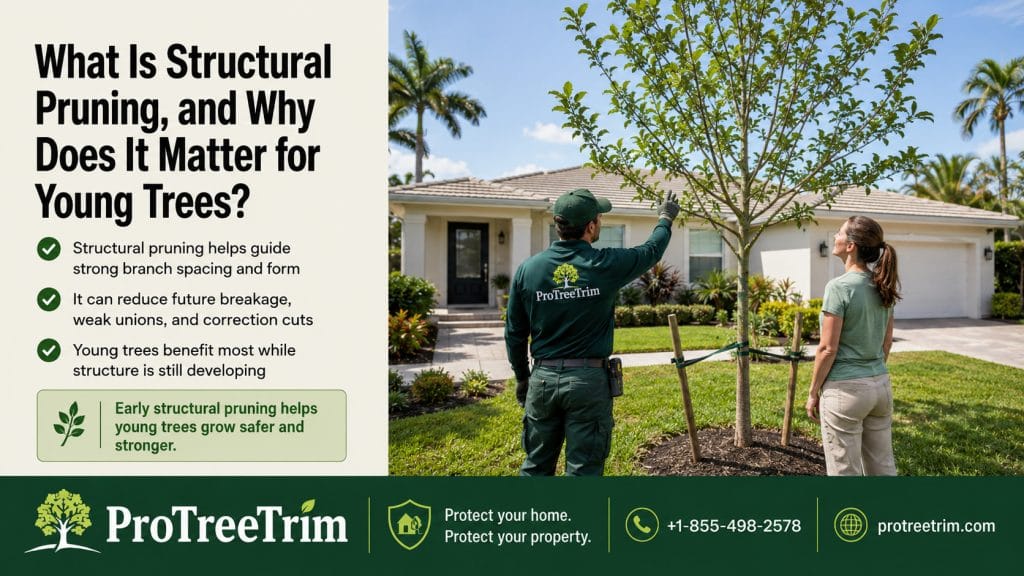
What Is Structural Pruning, and Why Does It Matter for Young Trees
Structural pruning is the careful training of a young tree so it develops a stronger trunk, better branch spacing, and fewer weak attachments as it matures. It is not about making the tree look smaller. It is about preventing future problems while the branches are still small enough to correct.
Continue reading What Is Structural Pruning, and Why Does It Matter for Young Trees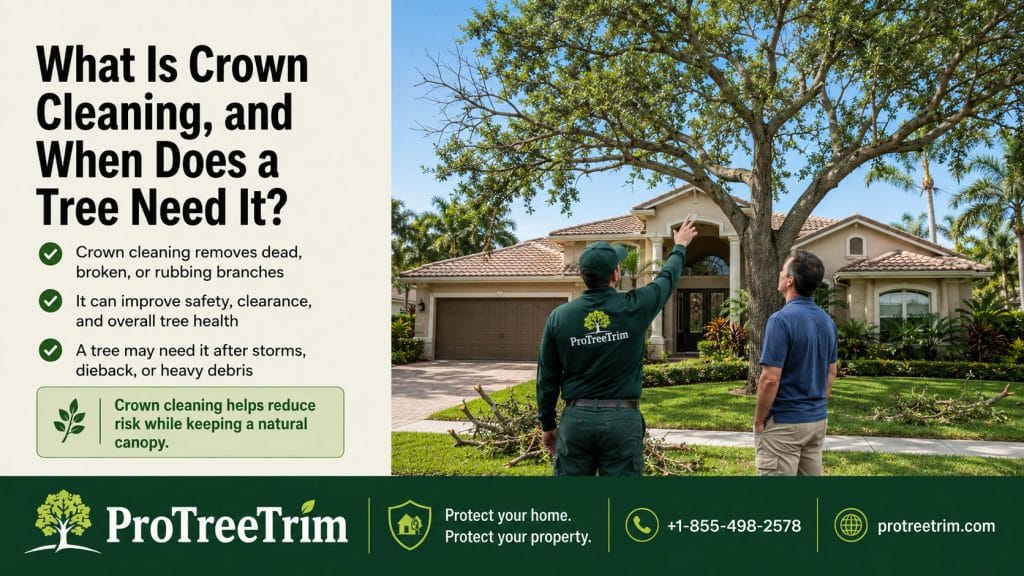
What Is Crown Cleaning, and When Does a Tree Need It?
Crown cleaning is a careful pruning approach that removes dead, dying, diseased, broken, weak, or poorly attached branches from a tree’s canopy. It is not the same as thinning, topping, or “cutting the tree back.” Done well, crown cleaning improves safety, appearance, and tree structure without removing healthy live branches unnecessarily.
Continue reading What Is Crown Cleaning, and When Does a Tree Need It?