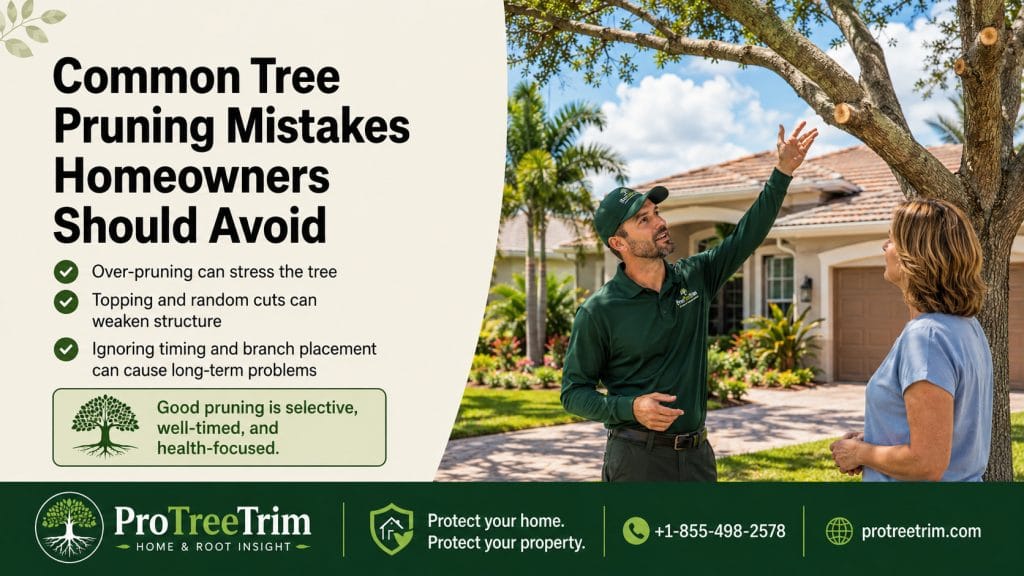
Tree pruning can improve safety, structure, clearance, and appearance when it is done carefully. Bad pruning can do the opposite. It can weaken branches, create large wounds, remove too much live canopy, stress palms, expose bark, damage trunks, and make future tree problems more expensive.
Continue reading Common Tree Pruning Mistakes Homeowners Should AvoidCategory: Tree Care & Pruning Decisions
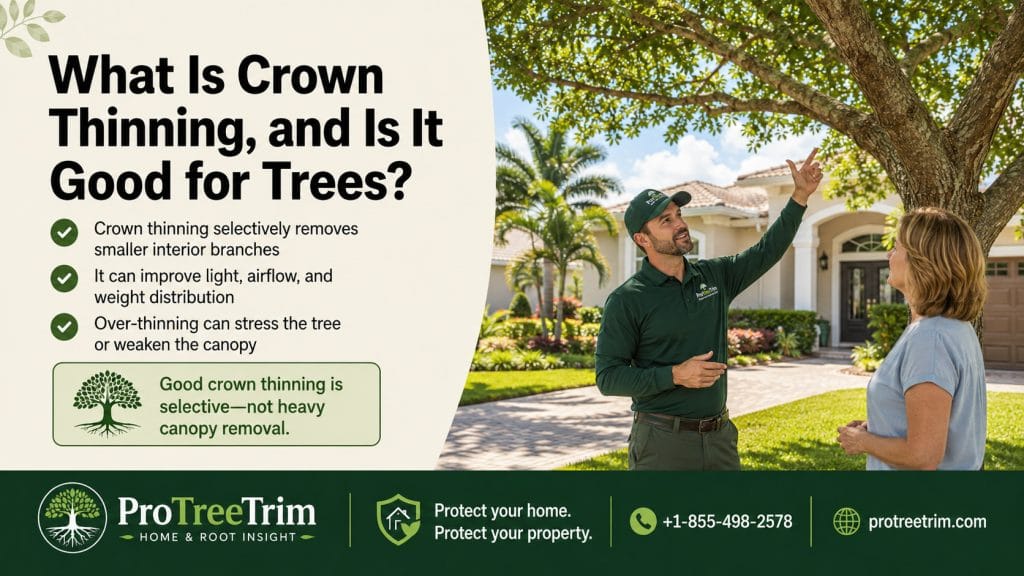
What Is Crown Thinning, and Is It Good for Trees?
Crown thinning is a pruning method that selectively removes some live branches from a tree’s canopy to reduce density. Homeowners often ask for crown thinning because a tree feels too dark, too heavy, too crowded, or too close to the house.
Continue reading What Is Crown Thinning, and Is It Good for Trees?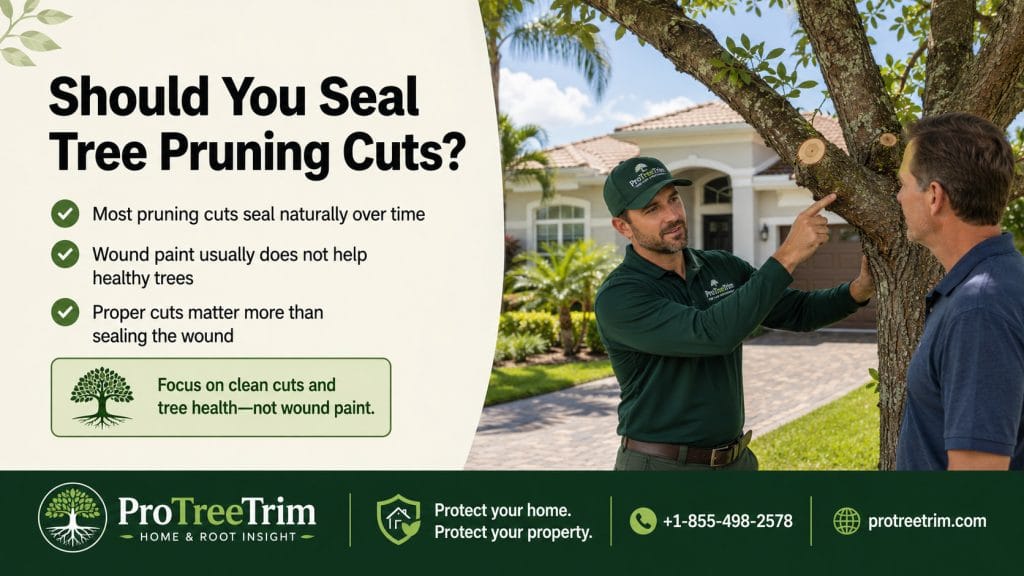
Should You Seal Tree Pruning Cuts
In most homeowner situations, tree pruning cuts should not be sealed with paint, tar, glue, caulk, or wound dressing. Trees do not heal like human skin. They respond to cuts by sealing off damaged tissue internally and growing new wood around the wound over time.
Continue reading Should You Seal Tree Pruning Cuts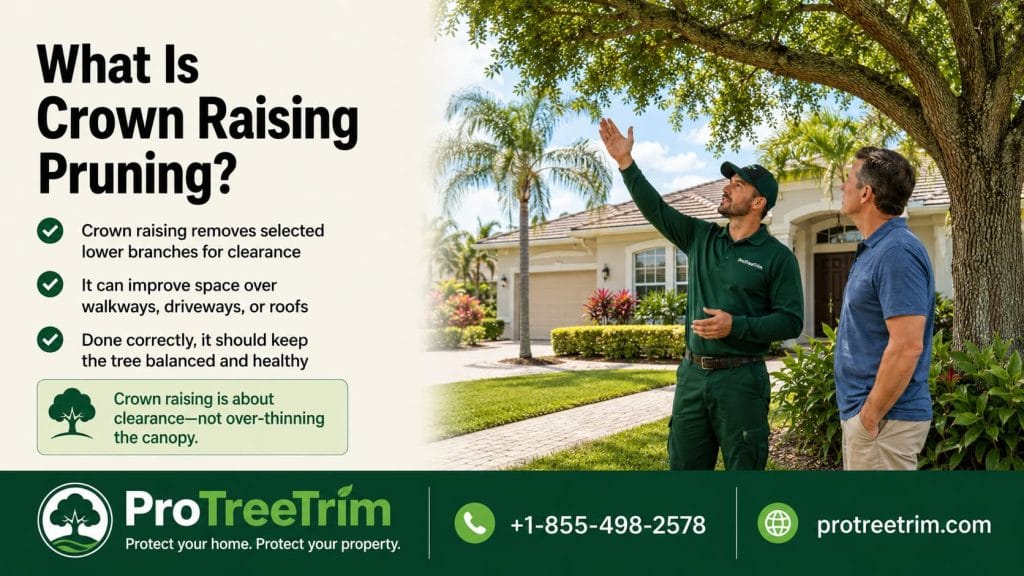
What Is Crown Raising Pruning?
Crown raising is a type of tree pruning that removes selected lower branches to create more clearance under the canopy. Homeowners often ask for crown raising when branches hang over a driveway, block a sidewalk, touch a roof, interfere with mowing, crowd a fence, or make the yard feel dark and hard to use.
Continue reading What Is Crown Raising Pruning?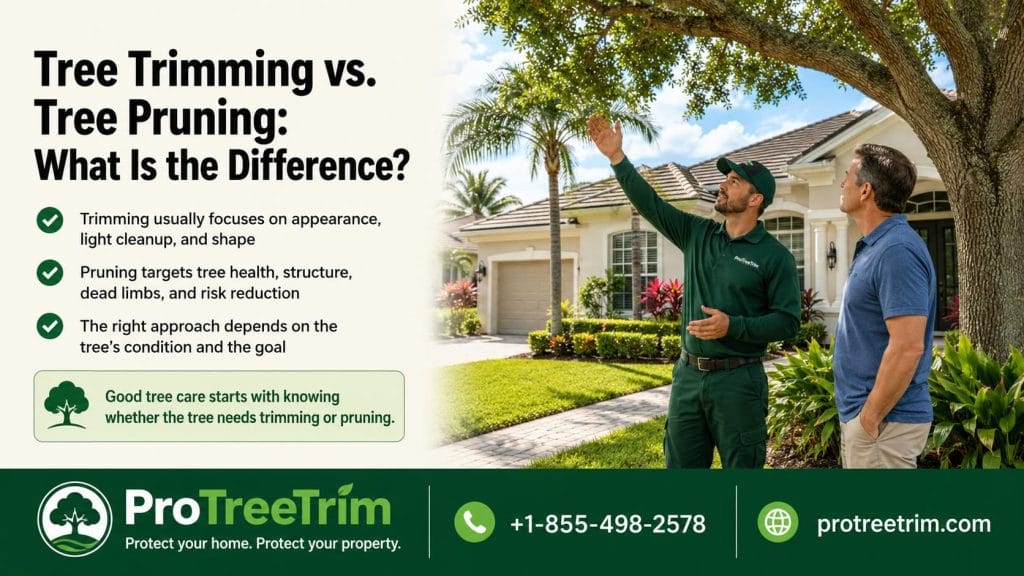
Tree Trimming vs. Tree Pruning: What Is the Difference?
Tree trimming and tree pruning are often used like they mean the same thing. In everyday conversation, many homeowners say “trim the tree” when they want branches cut back. But in practice, trimming and pruning can have different goals.
Continue reading Tree Trimming vs. Tree Pruning: What Is the Difference?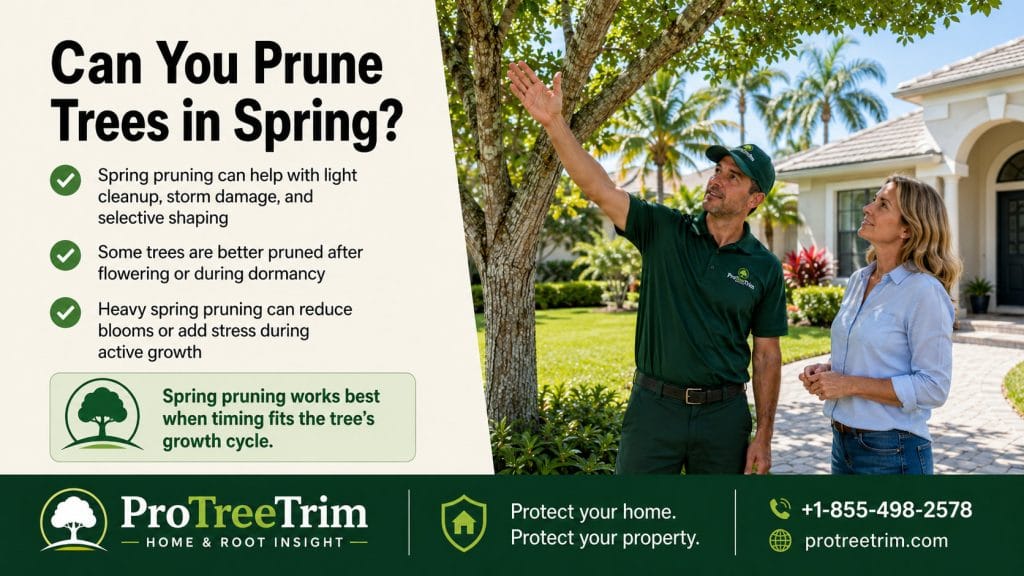
Can You Prune Trees in Spring?
You can prune some trees in spring, but spring pruning should be selective. Dead, broken, hazardous, or storm-damaged branches can often be removed when they create a clear problem. Heavy pruning, topping, or cutting a tree just as it is pushing new growth can add stress or remove flowers, leaves, and energy the tree is trying to use.
Continue reading Can You Prune Trees in Spring?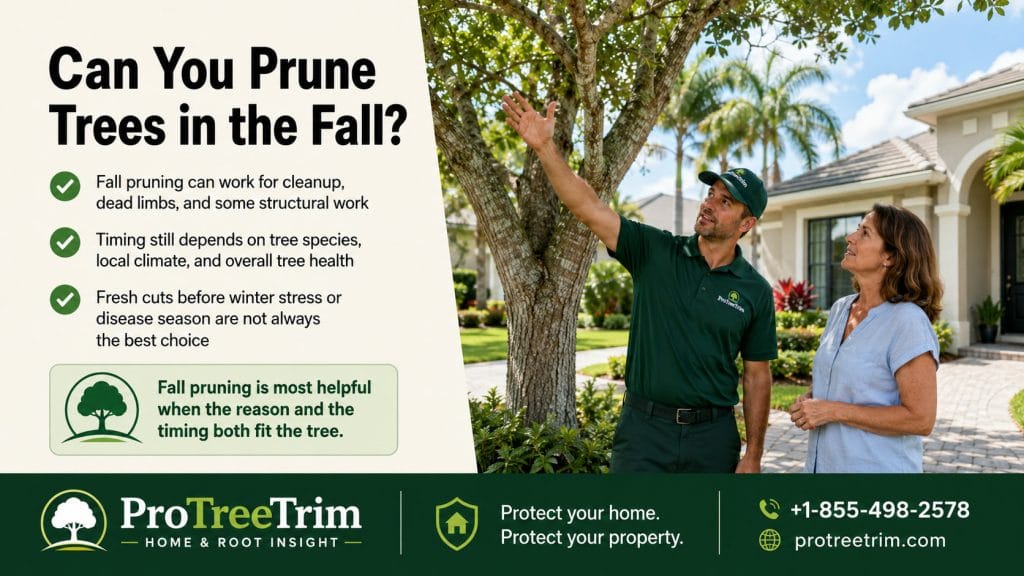
Can You Prune Trees in Winter?
You can prune many trees in winter, and for some trees, winter is one of the better times to prune. When deciduous trees have dropped their leaves, branch structure is easier to see, the tree is often less actively growing, and pruning decisions can be more precise.
Continue reading Can You Prune Trees in Winter?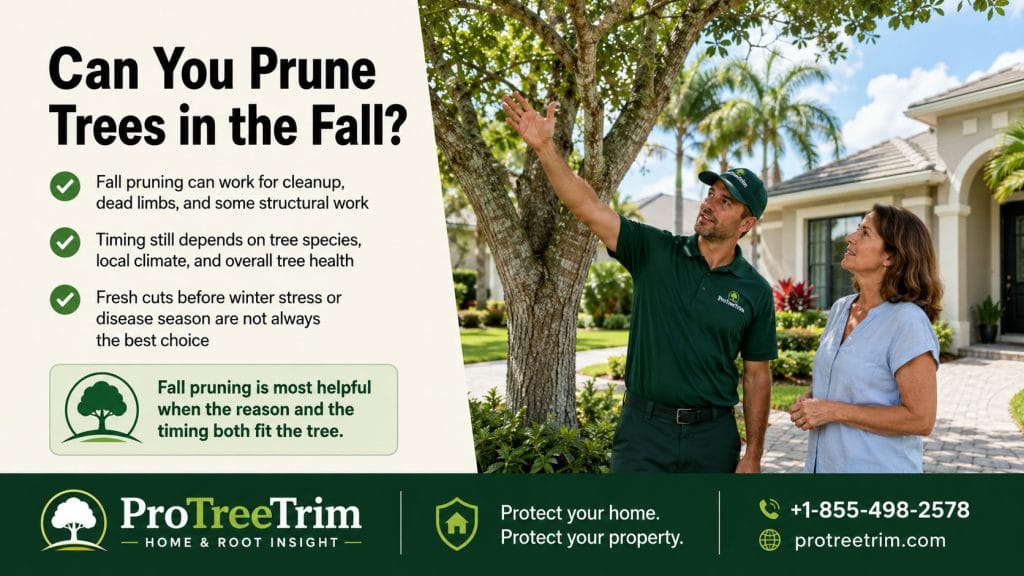
Can You Prune Trees in the Fall?
You can prune some trees in the fall, but fall is not automatically the best time for every tree. Light pruning, deadwood removal, storm cleanup, and clearance work may be appropriate when there is a clear reason. Heavy pruning, topping, or cutting a stressed tree just before colder weather or seasonal change can create problems.
Continue reading Can You Prune Trees in the Fall?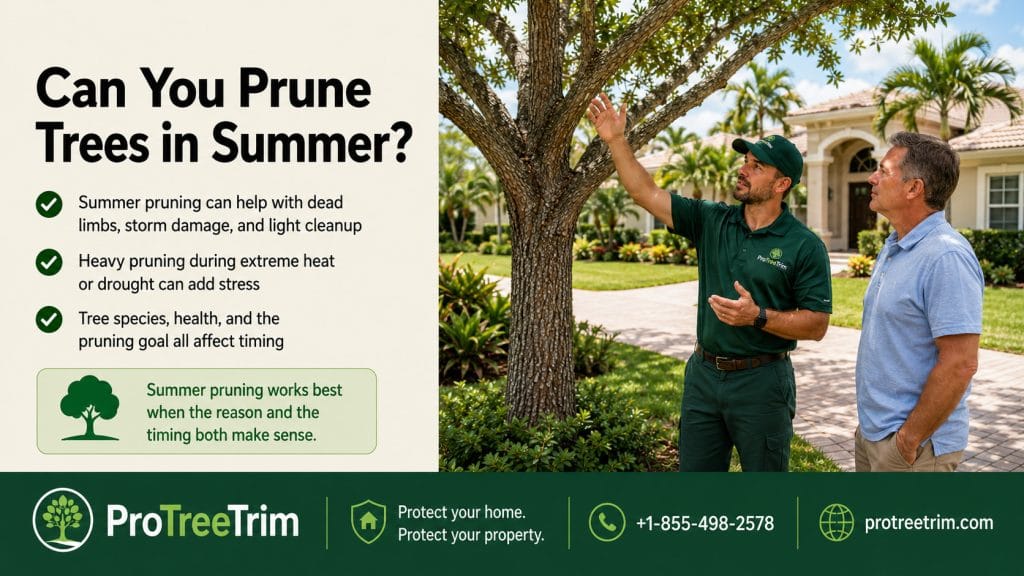
Can You Prune Trees in Summer?
You can prune some trees in summer, but summer is not always the best time for every pruning job. Light pruning, dead branch removal, clearance pruning, and storm-damage cleanup may be appropriate when there is a clear reason. Heavy pruning during extreme heat, drought, or active stress can make a tree’s condition worse.
Continue reading Can You Prune Trees in Summer?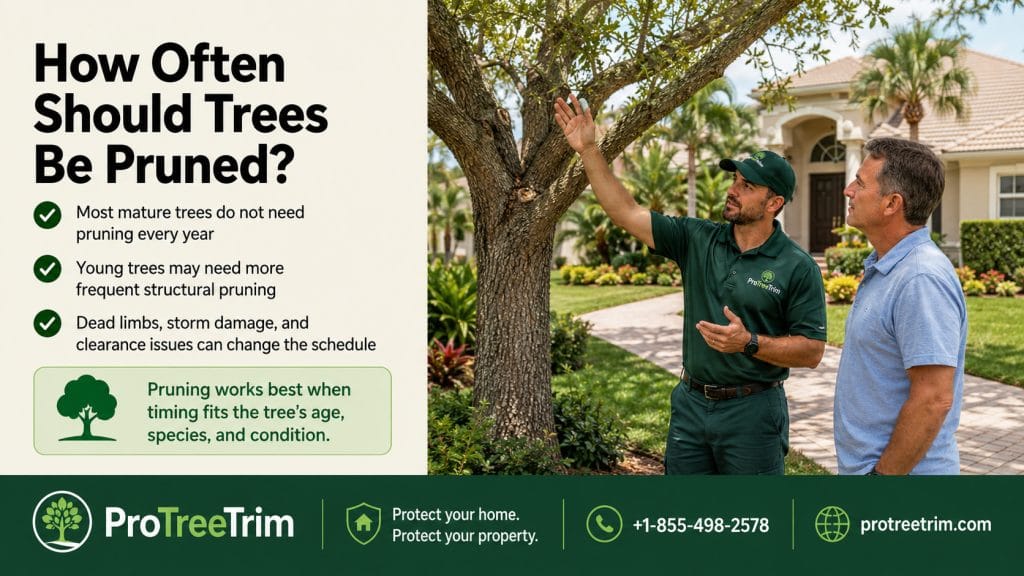
How Often Should Trees Be Pruned?
Trees do not all need pruning on the same schedule. Some young trees benefit from light structural pruning every few years. Some mature shade trees may go several years between pruning visits if they are healthy and well-placed. Palms, fruit trees, ornamentals, storm-damaged trees, and trees near roofs or driveways may need different timing.
Continue reading How Often Should Trees Be Pruned?