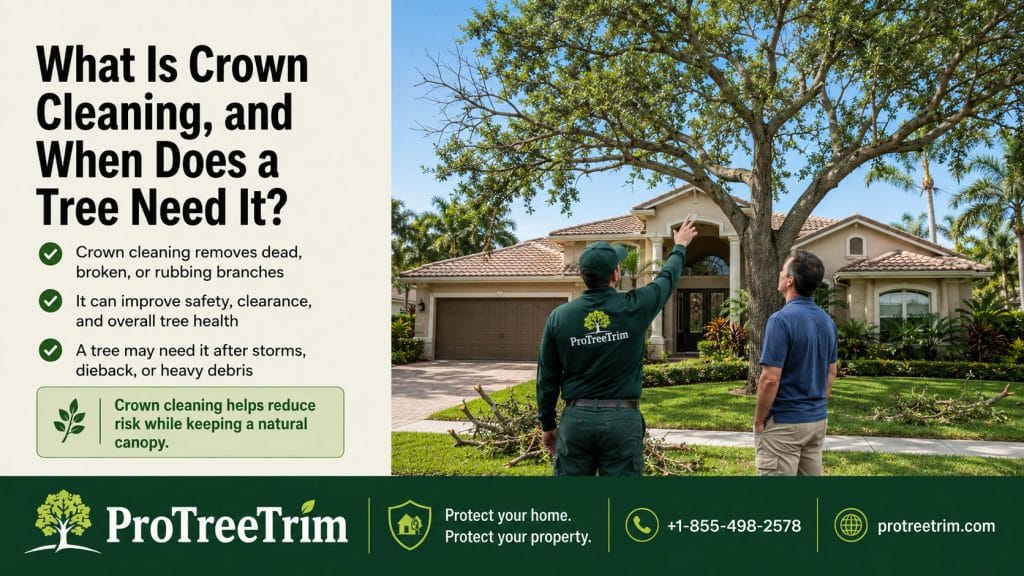
Crown cleaning is a careful pruning approach that removes dead, dying, diseased, broken, weak, or poorly attached branches from a tree’s canopy. It is not the same as thinning, topping, or “cutting the tree back.” Done well, crown cleaning improves safety, appearance, and tree structure without removing healthy live branches unnecessarily.
Continue reading What Is Crown Cleaning, and When Does a Tree Need It?Guides
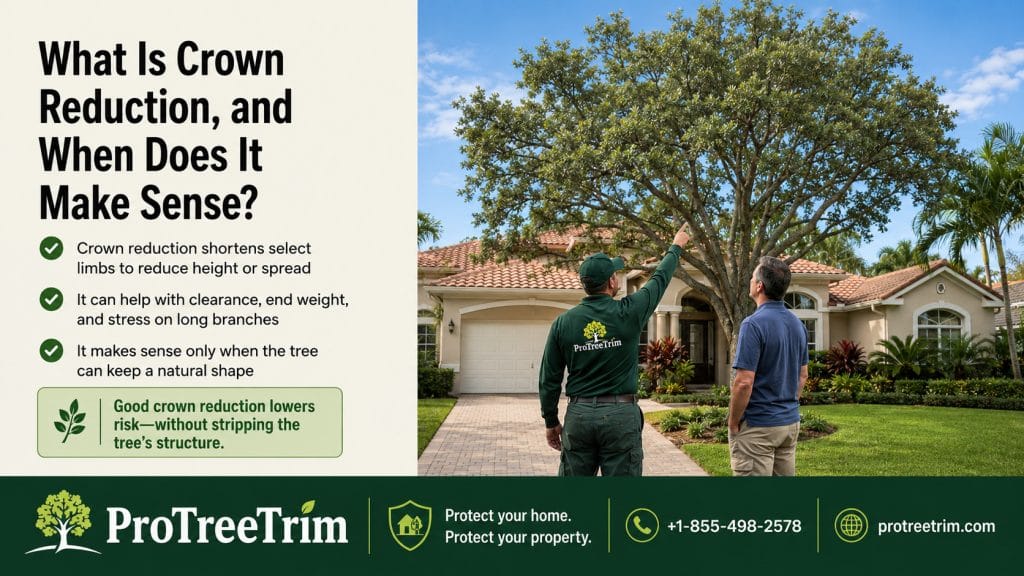
What Is Crown Reduction, and When Does It Make Sense?
Crown reduction is a pruning method used to reduce the height or spread of a tree by cutting selected branches back to suitable side branches. Done well, it can help manage clearance, weight, and structure. Done poorly, it can become topping by another name.
Continue reading What Is Crown Reduction, and When Does It Make Sense?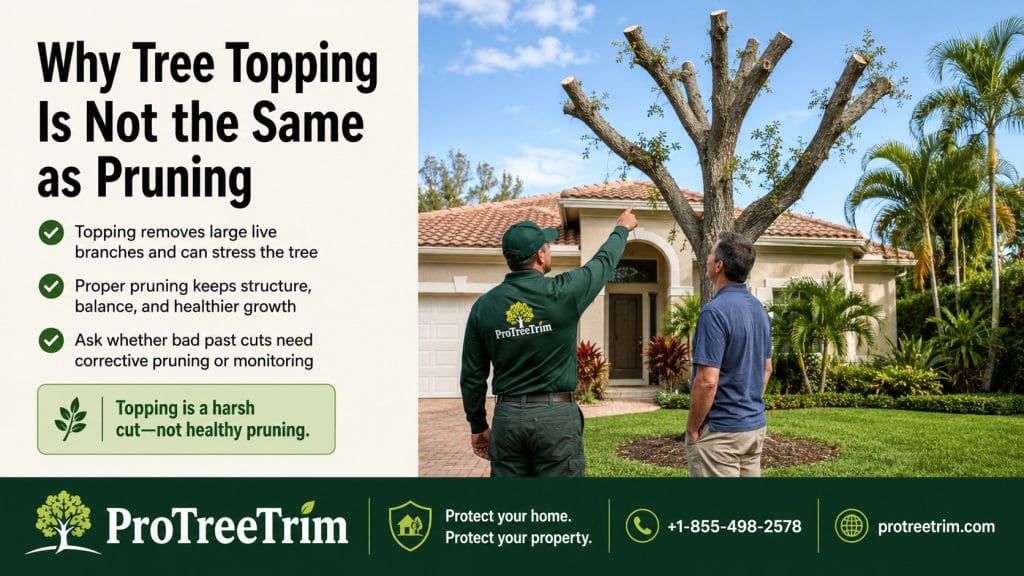
Why Tree Topping Is Not the Same as Pruning
Tree topping is not careful pruning. It is the harsh cutting back of large limbs or the upper canopy, often leaving stubs and forcing the tree into survival growth. A topped tree may look smaller for a short time, but the long-term result is often more stress, weaker regrowth, more decay risk, and repeated future cutting.
Continue reading Why Tree Topping Is Not the Same as Pruning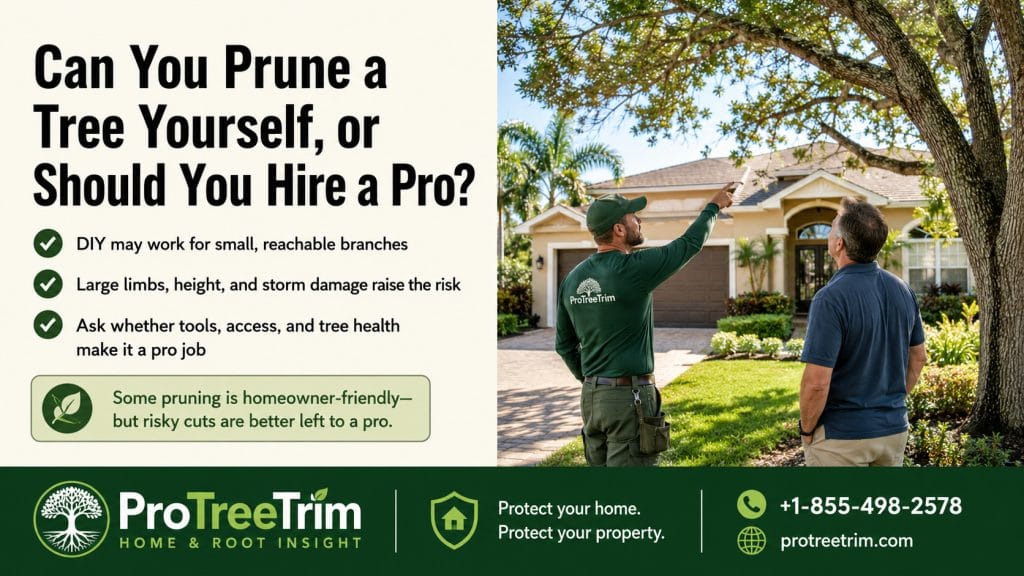
Can You Prune a Tree Yourself, or Should You Hire a Pro?
Some tree pruning can be done by a careful homeowner from the ground. Small dead twigs, light clearance around a walkway, or minor branch cleanup may be manageable with hand tools. But large limbs, high branches, storm damage, roofline branches, leaning trees, and anything near utility lines should not become a weekend ladder project.
Continue reading Can You Prune a Tree Yourself, or Should You Hire a Pro?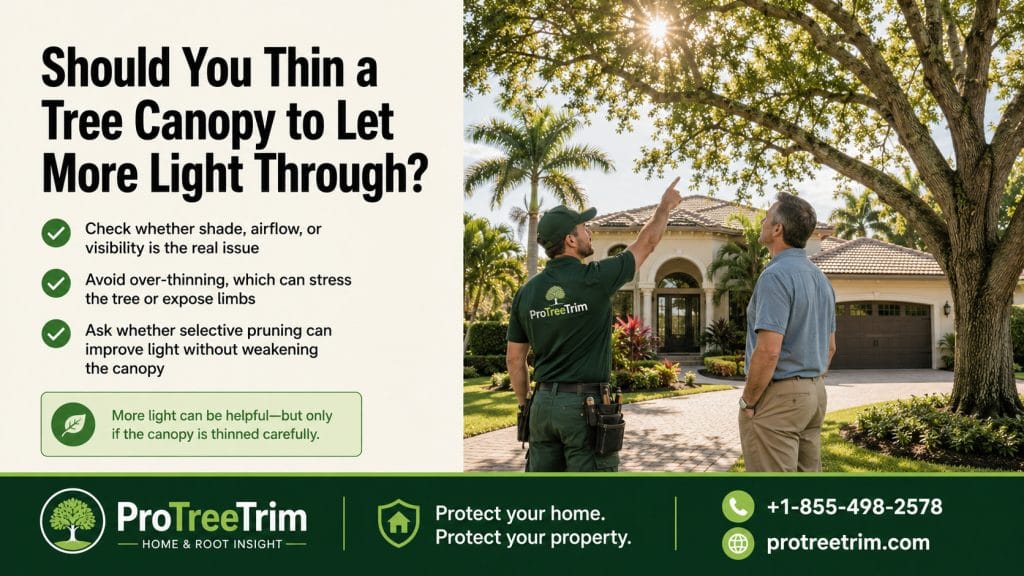
Should You Thin a Tree Canopy to Let More Light Through?
Thinning a tree canopy can make sense when branches are crowded, rubbing, dead, storm-damaged, or blocking needed clearance. But thinning should not mean stripping out the inside of the tree until it looks hollow. A healthy canopy protects the tree, feeds the roots, shades the bark, and helps the tree handle heat, wind, and stress.
Continue reading Should You Thin a Tree Canopy to Let More Light Through?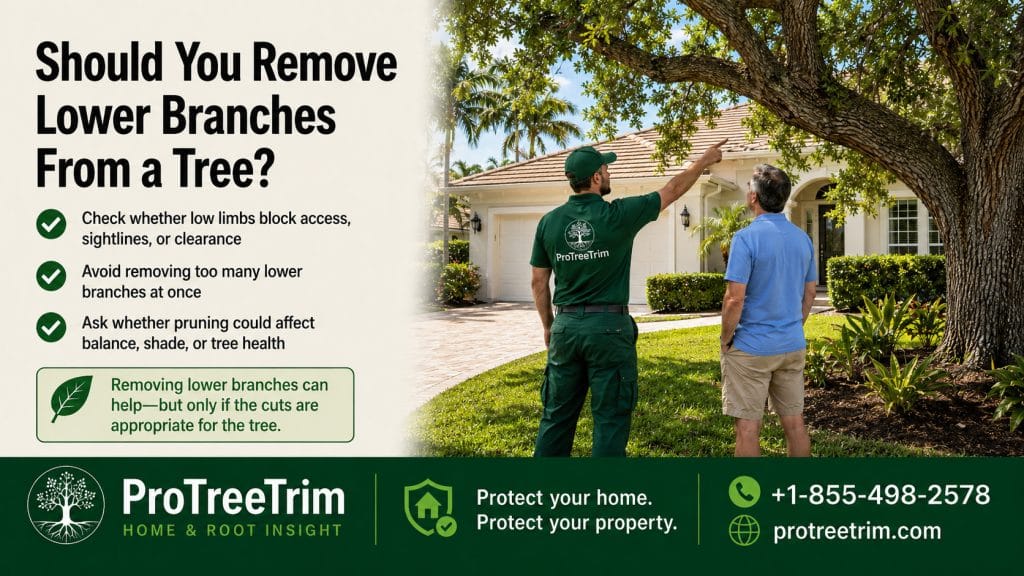
Should You Remove Lower Branches From a Tree?
Lower branches should not be removed just because they look low. Sometimes they protect the trunk, feed the tree, and help the tree develop a stronger structure. Other times, low limbs block a driveway, scrape a roof, hit vehicles, crowd a walkway, or make the yard hard to use. The right decision depends on the tree’s age, health, branch size, location, and the reason for pruning.
Continue reading Should You Remove Lower Branches From a Tree?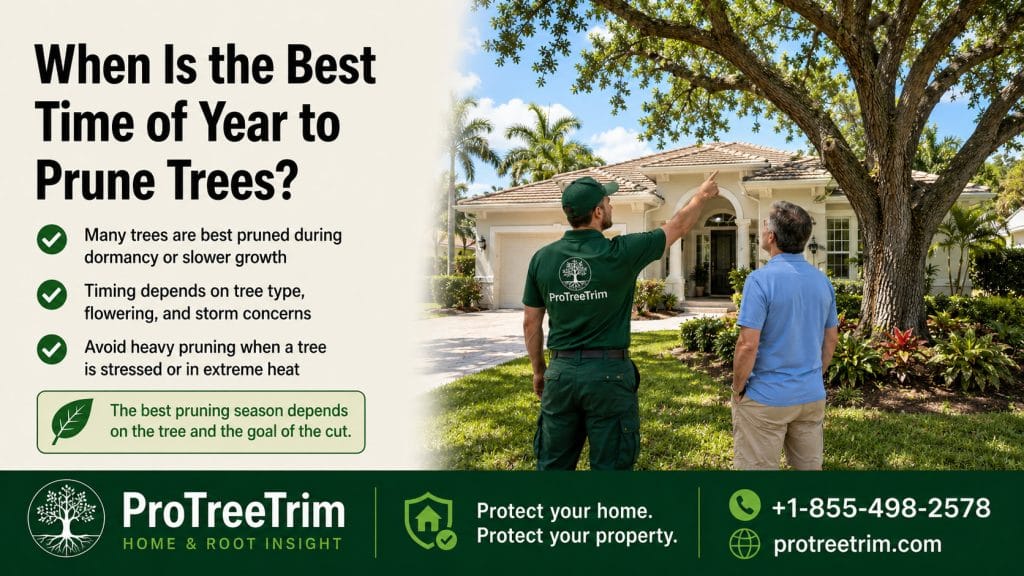
When Is the Best Time of Year to Prune Trees?
The best time to prune most trees is usually during the late dormant season, before strong spring growth begins. But timing depends on the reason for pruning. Dead, broken, or dangerous branches may need attention right away, while heavy live-branch pruning is usually better planned more carefully.
Continue reading When Is the Best Time of Year to Prune Trees?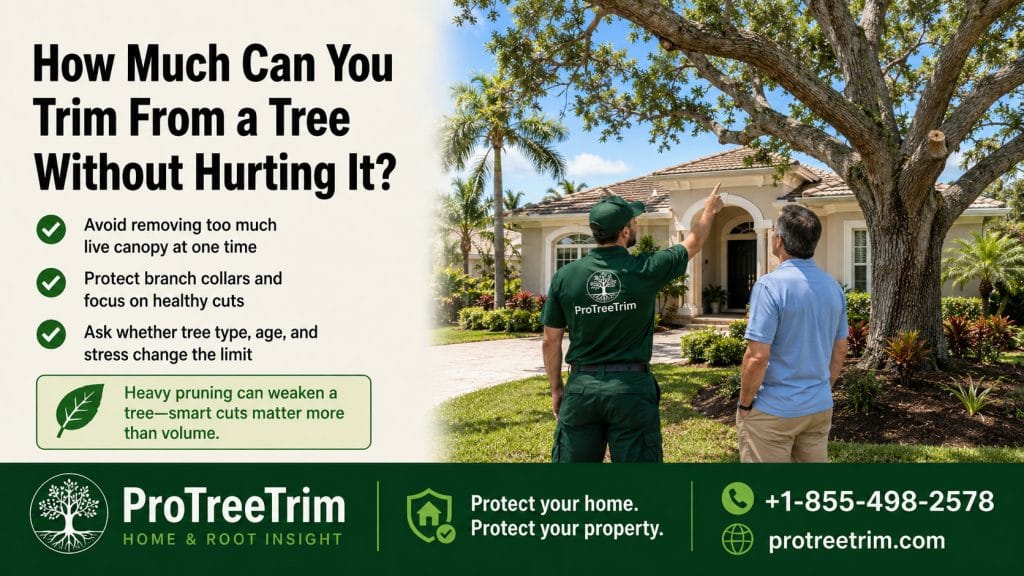
How Much Can You Trim From a Tree Without Hurting It?
A tree can usually handle careful pruning, but it may struggle after aggressive cutting. The safe amount depends on the tree’s species, age, health, season, branch size, and why the pruning is being done. Removing a dead limb is one thing. Cutting away a large part of the live canopy because the tree “looks too big” is another.
Continue reading How Much Can You Trim From a Tree Without Hurting It?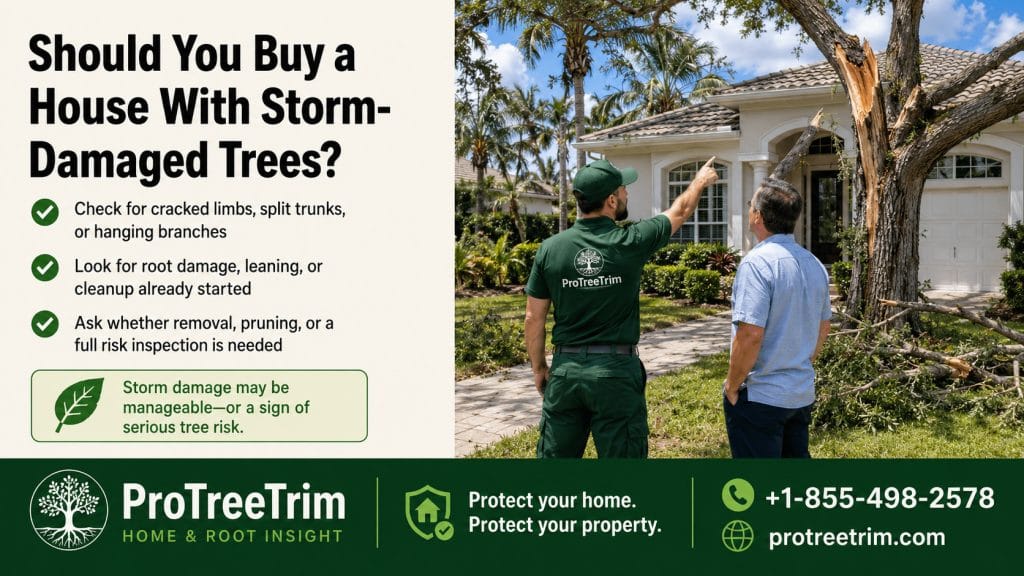
Should You Buy a House With Storm-Damaged Trees?
Storm-damaged trees do not automatically make a house a bad buy. Many yards recover well after branches are trimmed, debris is cleared, and damaged trees are removed. The concern is whether the damage is finished and documented—or whether you are about to inherit leaning trunks, cracked limbs, hidden root movement, roof contact, fence damage, or expensive cleanup after closing.
Continue reading Should You Buy a House With Storm-Damaged Trees?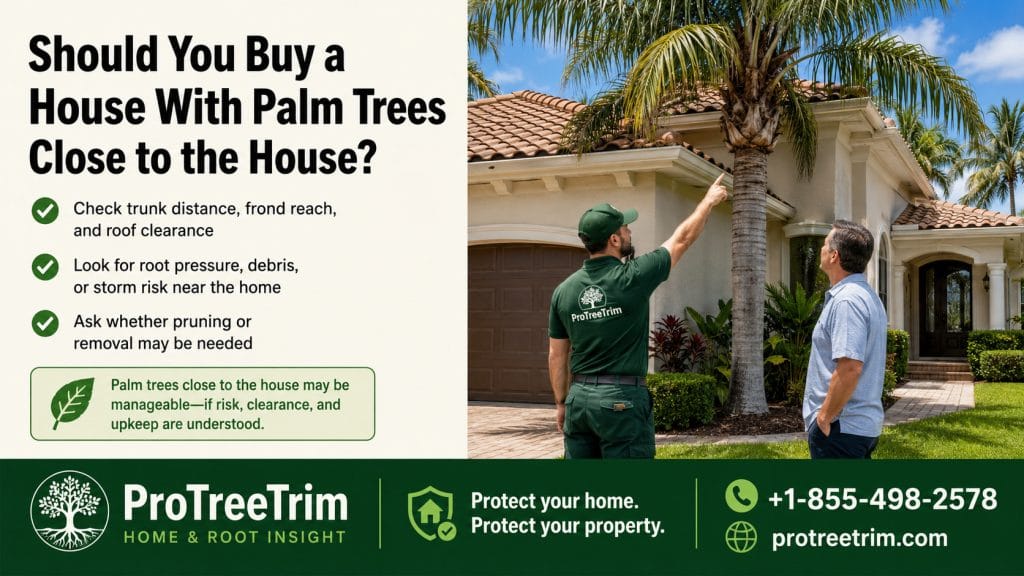
Should You Buy a House With Palm Trees Close to the House?
Palm trees close to a house are not automatically a problem. In many Florida-style yards, palms are part of the look buyers expect: tropical, clean, and established. The concern begins when a palm leans toward the roof, drops heavy fronds near the entry, touches a pool cage, crowds the driveway, or sits in a place where future trimming or removal would be difficult.
Continue reading Should You Buy a House With Palm Trees Close to the House?