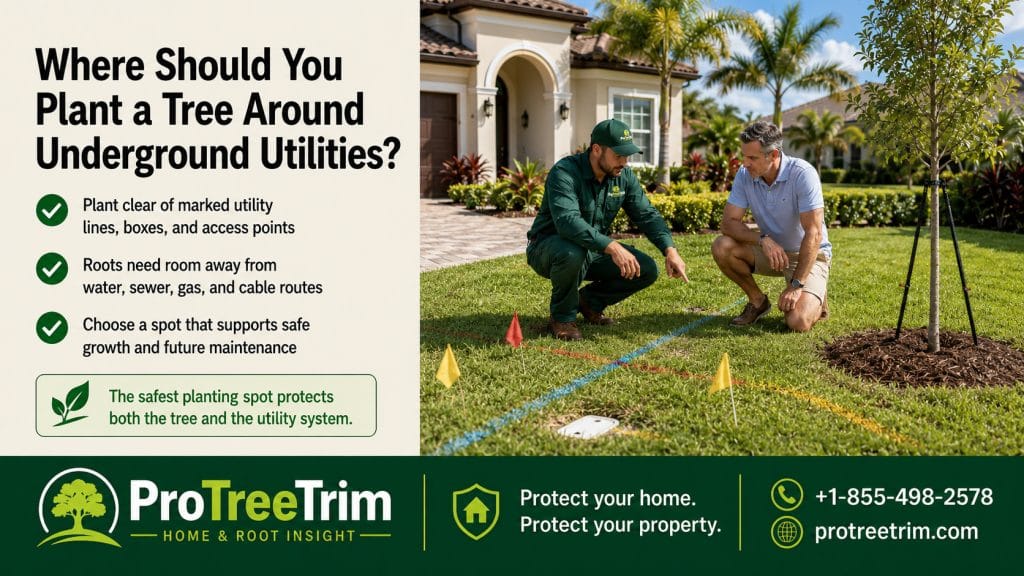
A tree can look perfectly placed above ground and still be wrong below ground. Underground utilities, irrigation lines, drainage pipes, septic components, cable lines, gas lines, and electrical service routes can all affect where a tree should be planted. Before digging a planting hole, homeowners should know what is below the surface and how the mature tree may affect future access.
Start Before the Shovel Goes Into the Ground
Tree planting is a digging project. That means underground safety comes first.
The national 811 system advises homeowners to contact 811 or use their state 811 center’s website a few business days before digging, including projects such as planting trees. In Florida, Sunshine 811 specifically notes that safe planting begins by contacting 811 before digging so buried utility lines can be located and marked.
That step matters because underground lines are not always where homeowners expect them to be. A yard may have electric, gas, communications, water, sewer, irrigation, lighting, pool equipment, or drainage lines running through areas that look like open planting space.
| Underground feature | Why it matters before planting |
|---|---|
| Electric service | Serious safety risk if damaged |
| Gas line | Dangerous and costly to strike |
| Water line | Repairs can disrupt the yard and home |
| Sewer or septic line | Roots and digging can create future problems |
| Cable or internet line | Service disruption and repair cost |
| Irrigation line | Easy to damage during planting |
| Drainage pipe | Roots and soil changes may affect water flow |
| Landscape lighting wire | Often shallow and easy to cut |
Utility Marking Does Not Solve Every Planting Question
Utility marking helps you avoid hitting buried public utility lines. It does not automatically tell you the best place for the tree.
You still need to think about mature roots, future maintenance, irrigation, drainage, and service access. A tree planted safely away from a marked line today may still become a problem later if it blocks access to a meter, valve, cleanout, septic lid, drainage area, or repair path.
Before planting, ask:
- Where are the marked underground lines?
- Are there private lines that may not be marked?
- Are irrigation pipes or landscape lighting wires nearby?
- Is there a septic system, drain field, or cleanout in the area?
- Will roots grow toward a pipe, wet area, or trench line?
- Would future utility repair require removing the tree?
- Can crews access the area later without damaging the tree?
Planting should protect both the tree and the property’s service systems.
Private Lines Are Easy to Forget
Many yards have private underground lines that may not be marked by standard utility locating. These can include irrigation, landscape lighting, pool equipment lines, gas grill lines, drainage pipes, invisible dog fence wires, or lines added by previous owners.
That is why homeowners should not rely only on memory. If the yard has been modified over time, there may be buried features that do not appear obvious from the surface.
Be especially cautious near:
- pool equipment
- outdoor kitchens
- detached garages
- sheds with power
- irrigation zones
- landscape lighting beds
- drainage swales
- septic areas
- old stump or tree-removal sites
- recently repaired trenches
A safe planting plan includes both official utility marking and common-sense site inspection.
Roots Follow Good Growing Conditions
Tree roots do not intentionally seek trouble. They grow where soil, oxygen, moisture, and space allow. Unfortunately, underground utility trenches can sometimes create easier paths for roots because the soil was disturbed during installation.
Wet areas can also attract roots. A leaking irrigation line, drainage problem, septic issue, or consistently damp trench may encourage root growth in that direction.
Before planting, look for clues:
| Yard clue | What it may suggest |
|---|---|
| Greener strip of grass | Possible water, irrigation, or buried line pattern |
| Soft soil after rain | Drainage or trench settlement may be present |
| Repaired trench line | Utility or drainage work may have happened |
| Irrigation heads nearby | Pipes may run through the planting area |
| Cleanout cap or lid | Sewer or septic access should stay clear |
| Low wet bed | Roots may be drawn toward moisture |
| Old tree stump nearby | Old roots and buried material may remain |
A tree planted near hidden moisture can grow differently than expected.
Do Not Plant Directly Over Access Points
Even if a tree will not damage a line, it may block access to it later. That matters.
Utility boxes, meters, cleanouts, septic lids, irrigation valves, drainage access points, and shutoff areas need room. A tree trunk, root flare, mulch bed, or low branches can make future repair harder.
Keep trees away from:
- utility boxes
- meter areas
- sewer cleanouts
- septic access lids
- irrigation valve boxes
- drainage cleanouts
- water shutoffs
- pool equipment lines
- service paths for repairs
A planting that looks good today can become a major nuisance when a technician needs to reach the area.
Choose Smaller Trees Near Utility Corridors
If utilities run through a narrow section of the yard, large shade trees are usually poor choices there. A smaller tree, shrub, or planting bed may be better.
Large trees need root space and future pruning access. If planted near underground utilities, they can create long-term conflicts with repairs, trenching, and service routes. If the tree ever needs removal, stump grinding near buried utilities may be limited or more delicate.
Better choices near utility-heavy areas usually have:
- smaller mature size
- moderate roots
- manageable canopy spread
- low debris burden
- easy pruning access
- enough room away from access points
- no conflict with overhead lines
The goal is not only to avoid the utility today. It is to avoid forcing future workers to cut roots, remove the tree, or damage the landscape during repairs.
Watch Driveways, Sidewalks, and Utilities Together
Underground utilities often run near driveways, sidewalks, front yards, and side yards. These are already high-conflict planting areas because roots, pavement, access, and service routes overlap.
A tree planted near a driveway may eventually lift hardscape. If underground utilities are also nearby, repair options become more limited. Cutting roots may stress the tree. Digging may hit lines. Removing the tree may require extra caution around buried services.
Before planting near hardscape, ask:
- Is there enough soil volume?
- Are utilities marked nearby?
- Are irrigation lines under the bed?
- Will roots have room away from pavement?
- Can the driveway or sidewalk be repaired later?
- Would future utility work damage the tree?
- Is there a better planting spot farther from both hardscape and utilities?
The best planting location avoids stacking multiple future problems in one small area.
Be Careful Near Septic Systems
Septic areas deserve their own caution. Trees should not be planted casually near tanks, drain fields, access lids, or reserve areas. Roots, service access, and future repair needs all matter.
A tree may be far enough from a public utility line but still poorly placed over a septic area. Before planting in any yard with septic, identify the system layout first. Do not guess based on where the grass looks open.
If the only available planting spot is over or near septic components, choose a different landscape solution.
Do Not Let Fresh Landscaping Hide Access
Mulch beds, shrubs, and new trees can make a yard look finished, but they can also hide important service points. A cleanout, utility cover, valve box, or septic lid should remain visible and reachable.
Avoid piling mulch over covers, planting trees beside lids, or placing roots where future digging is likely. If a worker has to remove your new landscape to repair a line, the planting plan was too close.
A well-designed yard looks good and remains serviceable.
What If a Tree Is Already Over Utilities?
If an existing tree is planted near underground utilities, do not panic. Many trees coexist with buried lines for years. The concern depends on tree size, root behavior, utility type, access needs, and whether repairs are already happening.
Do not cut major roots or dig around utility lines without proper guidance. If a line repair is needed near a tree, the tree and utility work should be planned together.
Possible concerns include:
- root cutting during trench repair
- soil compaction from equipment
- damage to the root flare
- buried trunk base after backfill
- stump grinding limits if removal happens
- future decline after root disturbance
A tree may look fine before utility work and show stress later if roots are damaged.
Final Planting Test
Before planting a tree near any suspected utility area, ask:
Have underground lines been marked?
Are there private lines nearby?
Is there septic, irrigation, drainage, or lighting in the area?
Will the mature tree block access?
Will roots have enough room?
Would future repair require cutting roots or removing the tree?
Is there a less complicated spot nearby?
A tree should not be planted where it turns routine utility access into a future removal project.
If you are unsure whether a tree is safe to plant near underground utilities, irrigation, septic, drainage, driveway edges, or service areas, ProTreeTrim can help connect homeowners with local tree service support. Call +1-855-498-2578 or visit protreetrim.com.
FAQs
Should I call 811 before planting a tree?
Yes. Tree planting involves digging, and 811 is the standard starting point for having underground utility lines marked before the project begins.
Does 811 mark irrigation or landscape lighting lines?
Not always. Private lines such as irrigation, lighting, pool equipment, or homeowner-installed lines may require extra attention or a private locating service.
Can tree roots damage underground utilities?
They can contribute to problems when roots grow toward moisture, openings, disturbed soil, or existing weak points. Placement and mature root space matter.
What should I avoid planting over?
Avoid planting trees over utility lines, septic components, cleanouts, irrigation valves, drainage access points, or any area likely to need future digging or repair.
ProTreeTrim™ can help you take the next step.
If you are dealing with a damaged tree, fallen branch, stump, root issue, palm concern, or storm cleanup question in Florida, call ProTreeTrim for tree service support.