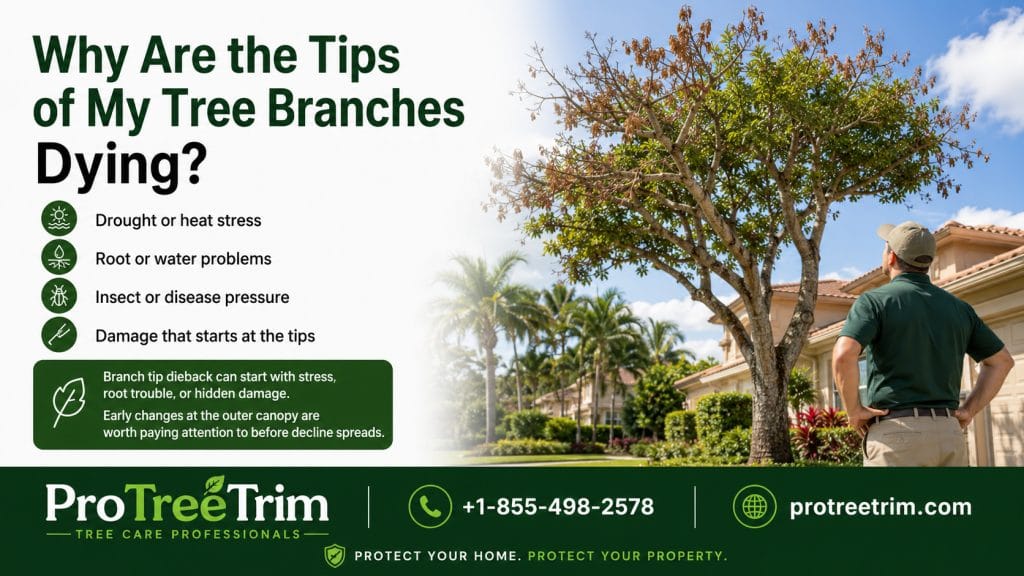
Dying branch tips usually mean the tree is under stress somewhere. The cause may be dry soil, waterlogged roots, root damage, insects, cankers, storm injury, or old pruning wounds. A few small dead tips may be minor. Spreading tip dieback, dead limbs over property, or symptoms after construction or storms deserve a closer look.
Start With the Pattern of Dieback
Do not judge the tree from one branch. Step back and look at the whole canopy.
Are branch tips dying across the entire tree, or only on one side? Is the top affected first? Did the problem appear after a dry spell, heavy rain, driveway work, trenching, pruning, or a storm? A pattern gives you more useful information than a close-up of one dead twig.
Drought stress can cause branch dieback in some trees. University of Minnesota Extension notes that severe drought stress may cause individual branches to die back, and that leaf margins and branch extremities often brown and wilt first.
| What you notice | What to check first |
|---|---|
| Tips dying after dry weather | Soil moisture, mulch, irrigation coverage |
| Tips dying after heavy rain | Drainage, saturated soil, root stress |
| One side of tree affected | Root damage, reflected heat, irrigation pattern |
| Upper canopy dying back | Drought, root restriction, construction damage |
| Dead tips plus bark wounds | Cankers, storm damage, pruning injury |
| Dead tips plus holes or frass | Borers or insects may be involved |
| Dead tips plus trunk cracks or mushrooms | Larger tree condition needs attention |
Roots Often Explain What Shows Up in the Canopy
Branch-tip dieback can feel like a canopy problem, but the trigger may be underground. A tree with damaged or stressed roots may not move enough water to support the outer canopy, especially during heat, drought, or after a sudden weather shift.
Around homes, root stress can come from ordinary projects: paver installation, fence posts, trenching, irrigation repair, driveway widening, grading, pool work, or repeated foot and equipment traffic. The tree may not react immediately. Tip dieback may appear weeks or months later.
Oregon State University Extension describes “flagging” as wilted, browning, or limp foliage and notes that single branches or one section of a tree may show symptoms when something is wrong. It also points out that drought stress can affect whole trees, while other problems may show up in one section first.
Before pruning, look around the base:
- Is the root flare buried under mulch or soil?
- Has soil washed away from roots?
- Does one area stay wet after irrigation?
- Are pavers, driveway edges, or sidewalks lifting?
- Was any digging done near the tree?
- Is the trunk cracked, oozing, or showing soft wood?
These checks help you avoid blaming pests or disease too quickly.
Do Not Prune First Just to “Clean It Up”
Dead tips can make a tree look messy, but trimming should have a purpose. Removing small dead twigs from reachable areas may be simple cleanup. Cutting larger limbs, especially overhead or near structures, is a different decision.
University of Minnesota Extension’s pruning guidance says pruning can promote plant health by removing dead or dying branches injured by disease, insects, storms, animals, or mechanical damage. It also warns against topping, which can create weak structures and other problems.
For homeowners, the line is practical. A few dead tips in an open yard can often be monitored. A dead branch over a driveway, roof, pool cage, sidewalk, fence, or parked car should be handled more carefully. If the branch is high, heavy, or near wires, do not turn it into a ladder job.
Also avoid fertilizing or spraying before you understand the cause. If the issue is root damage, waterlogged soil, drought stress, or structural decline, a random treatment will not solve the real problem.
When Tip Dieback Deserves Faster Attention
Tip dieback becomes more concerning when it is spreading, affecting large limbs, or appearing with other symptoms. ISA’s TreesAreGood plant health guidance notes that discolored leaves, dead branches, and early leaf drop can point to anything from a minor issue to a more complex problem with multiple causes.
Pay closer attention if you also see:
- dead branches getting larger each season
- bark peeling or cracking near dead areas
- mushrooms near the trunk base
- sawdust-like material or small bark holes
- sticky residue, ants, or white fuzzy insects
- a new lean after rain or wind
- roots lifting soil or hardscape
- large limbs over high-use areas
Take photos from the same spot every couple of weeks. Include the full tree, dying tips, trunk base, mulch, irrigation heads, driveway or pavers, and any recent work around the roots. That simple record can help separate temporary stress from a problem that is moving through the tree.
If you are unsure whether dying branch tips, root stress, insect activity, or dead limbs point to a larger tree issue, ProTreeTrim can help connect homeowners with local tree service support. Call +1-855-498-2578 or visit protreetrim.com.
FAQs
Do dying branch tips mean my tree is dying?
Not always. Tip dieback can come from temporary drought, root stress, pests, cankers, pruning damage, or storm injury. The pattern and severity matter.
Should I cut off dead branch tips?
Small reachable dead twigs may be simple cleanup, but large dead limbs, high branches, or limbs over structures should be handled carefully.
Can root damage cause branch tips to die?
Yes. If roots are cut, compacted, buried, dried out, or waterlogged, the canopy may show stress through smaller leaves, dead tips, or branch dieback.
When should I worry about tip dieback?
Worry more if it spreads quickly, affects large branches, appears with trunk cracks or mushrooms, or involves limbs over a roof, driveway, pool cage, walkway, or utility area.
ProTreeTrim™ can help you take the next step.
If you are dealing with a damaged tree, fallen branch, stump, root issue, palm concern, or storm cleanup question in Florida, call ProTreeTrim for tree service support.