
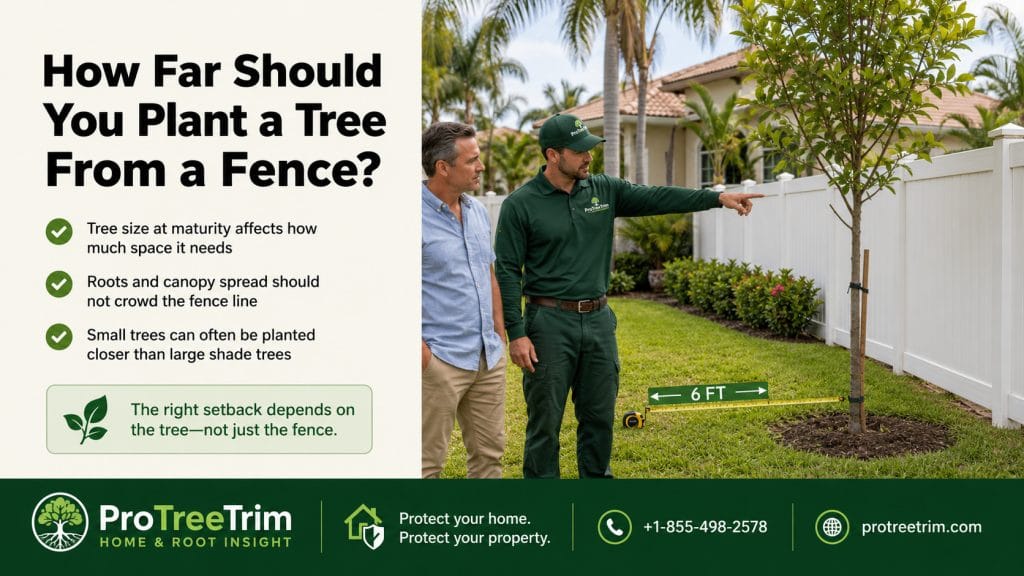
A tree near a fence can add privacy, shade, and a more finished look to the yard. But if it is planted too close, that same tree can push fence posts, drop limbs over the property line, crowd the neighbor’s yard, block future access, or become difficult to prune and remove. The right distance depends on the tree’s mature size, root spread, canopy shape, fence type, and how the space will be used years from now.
Do Not Plant for the Fence You See Today
A new fence makes a yard feel organized. A young tree makes the landscape feel hopeful. The problem begins when both are judged only in their current size.
A tree planted two feet from a fence may look fine when it is small. Ten years later, the trunk may crowd the fence, branches may hang over the neighbor’s side, roots may push posts, and pruning access may be limited.
Before planting, imagine the full-grown tree beside the full-grown maintenance problem.
| Future issue | Why it matters |
|---|---|
| Trunk grows too close to fence | Fence repair or replacement becomes harder |
| Branches cross property line | Neighbor concerns may appear |
| Roots push posts or panels | Fence alignment may shift |
| Low limbs block side-yard access | Mowing, gates, and service access get harder |
| Tree leans toward fence | Storm and boundary concerns increase |
| Stump near fence after removal | Grinding and cleanup become more difficult |
| Canopy crowds neighbor’s roof or shed | Future pruning may need coordination |
A fence line is not empty space. It is a boundary, a repair zone, an access path, and sometimes a neighbor relationship.
Mature Canopy Spread Matters More Than the Trunk
Homeowners often ask how far the trunk should be from the fence. That is important, but the canopy may become the bigger problem.
A tree with a narrow upright form may fit near a fence better than a broad spreading tree. A large shade tree planted near a fence may eventually send half its canopy over the neighbor’s yard. That does not always create a problem, but it can if limbs become heavy, dead, storm-damaged, or difficult to reach.
Before planting, ask:
- How wide will this tree become?
- Will branches naturally grow over the fence?
- Will the tree shade the neighbor’s yard more than expected?
- Will limbs reach a shed, pool cage, roof, driveway, or utility area?
- Will future pruning require access from the neighbor’s side?
- Will the tree still look balanced if one side must be cut back?
A tree that must be flat-cut on the fence side every few years is usually the wrong tree for that spot.
Roots and Fence Posts Can Compete
Roots do not need to be aggressive to create fence problems. As trees grow, roots expand through available soil. Fence posts, concrete footings, compacted paths, and narrow beds can all interfere with that growth.
The first visible sign may be a post leaning slightly. Then a panel shifts. Then a gate no longer closes cleanly. Sometimes the tree gets blamed when the fence was already old or poorly installed. Other times, the root-fence conflict is real.
Be cautious with trees that develop large surface roots near:
- wood fence posts
- vinyl fence posts
- chain-link posts
- concrete footings
- narrow side yards
- retaining edges
- paver borders
- gates and latches
The closer the tree is planted, the fewer options you have later. Cutting roots to save the fence may stress the tree. Removing the tree may damage the fence. Repairing the fence may disturb roots.
Good spacing prevents that trap.
Privacy Trees Need Room Too
Many fence-line trees are planted for privacy. That is understandable. Homeowners want to block a neighbor’s view, soften a bare fence, hide a road, or make a backyard feel less exposed.
But privacy planting often goes wrong because trees are planted too tightly. A row of young trees may look thin at first, so the homeowner plants more. A few years later, the trees crowd each other, lower branches die, roots compete, and one side gets hacked back at the fence.
For privacy, spacing is just as important as species.
A better privacy plan may use:
| Privacy goal | Better approach |
|---|---|
| Block a two-story view | Use properly spaced trees with mature height in mind |
| Soften a fence | Use shrubs or small trees that fit the bed |
| Create fast screening | Avoid overcrowding fast growers |
| Hide a road | Layer trees and shrubs instead of one tight row |
| Add backyard shade | Plant away from fence so canopy can spread naturally |
| Reduce neighbor view | Keep future pruning access on your side |
A privacy tree should not become a boundary dispute waiting to happen.
Leave Space for Fence Repair
Every fence eventually needs work. Panels may need replacement. Posts may rot or shift. Gates may need adjustment. Storms may damage sections. If a tree is planted too close, even simple fence repair can become difficult.
Before planting, ask yourself:
- Can someone replace this fence panel later?
- Can a post be dug out without cutting major roots?
- Can a gate open fully?
- Can a ladder or tool fit in the space?
- Can a tree crew work from my side if needed?
- Will the trunk block access to the fence line?
A planting plan that ignores future repair access may look good for a few years and then become frustrating.
Think About the Neighbor Side Before You Plant
A tree near a fence does not stay entirely “yours” in practical terms. Branches, roots, shade, leaves, fruit, seed pods, and storm debris may affect the neighbor’s side too.
That does not mean you should avoid planting near boundaries. It means you should plant thoughtfully.
Avoid placing messy, brittle, thorny, or large-limbed trees where they will naturally drop debris into the neighbor’s pool, driveway, roof, shed, or patio. Avoid trees that will need regular pruning from the neighbor’s side. Avoid species that grow too wide for the narrow strip available.
A good fence-line tree should be maintainable from your side as much as possible.
Fence Type Changes the Decision
Different fences create different planting concerns.
| Fence type | Planting concern |
|---|---|
| Wood fence | Moisture, roots, panel access, limb rubbing |
| Vinyl fence | Root pressure, panel replacement, heat reflection |
| Chain-link fence | Branches and vines can tangle through the fence |
| Privacy fence | Limited visibility may hide trunk and root problems |
| Metal fence | Branch rubbing and gate clearance may matter |
| Fence with concrete footings | Root and post conflicts can be harder to fix |
| Shared boundary fence | Neighbor communication may matter more |
A tree that works near a chain-link fence may be a poor choice near a solid privacy fence with narrow maintenance access.
Avoid Trees That Drop Heavy Debris Along Fence Lines
Fence lines often collect debris because wind pushes leaves, fruit, and branches into corners. If the tree drops heavy or messy material, that cleanup becomes more annoying.
Be cautious with trees that drop:
- large fruit
- staining berries
- heavy seed pods
- big palm fronds
- sharp leaves or thorns
- brittle branches
- sticky residue
- large nuts or acorns
A messy tree near the middle of a lawn may be manageable. A messy tree against a fence can create constant cleanup on both sides.
When Planting Near a Fence Can Work Well
Planting near a fence can work beautifully when the tree fits the space.
Good fence-line trees usually have:
- appropriate mature size
- manageable canopy spread
- roots that fit the available soil area
- limited heavy debris
- good branch structure
- enough spacing from posts and panels
- room for pruning from your side
- no major utility conflicts
- no direct path toward neighbor structures
The best tree near a fence looks intentional. It provides privacy or shade without leaning on the boundary for support.
When to Move the Tree Farther Away
Move the planting location farther from the fence when the tree will become large, broad, heavy-limbed, fast-growing, messy, or difficult to maintain.
Extra spacing is especially important if the fence is near:
- a neighbor’s pool cage
- a shed or roofline
- a driveway
- a utility line
- a narrow side yard
- a retaining wall
- septic components
- a gate or access path
- an area where crews may need to work later
If the only way the tree will fit is by cutting one side flat forever, it is not a good fence-line tree.
Final Fence-Line Planting Test
Before planting, stand at the proposed spot and picture the mature tree.
Will branches cross the fence?
Will roots push posts?
Will the trunk block repairs?
Will the neighbor get the messy side?
Can you prune it from your side?
Will a stump grinder fit there someday if removal is needed?
If those answers create problems, move the tree or choose a smaller species.
A fence-line tree should improve the yard without creating years of repair, pruning, and neighbor stress.
If you are unsure whether a tree is a good fit near your fence, property line, gate, or neighbor-facing yard area, ProTreeTrim can help connect homeowners with local tree service support. Call +1-855-498-2578 or visit protreetrim.com.
FAQs
How far should a tree be planted from a fence?
There is no one distance for every tree. The right spacing depends on mature trunk size, canopy spread, root behavior, fence type, and future access needs.
Can tree roots damage a fence?
Yes. Roots can contribute to leaning posts, shifted panels, gate problems, or soil movement, especially when trees are planted too close.
Is it okay for branches to grow over the neighbor’s side?
It may happen with mature trees, but it can create maintenance and boundary concerns if branches become heavy, dead, messy, or hard to prune.
What trees should not be planted near fences?
Avoid trees that grow too large for the space, develop large surface roots, drop heavy debris, have brittle limbs, or require frequent pruning from the neighbor’s side.
ProTreeTrim™ can help you take the next step.
If you are dealing with a damaged tree, fallen branch, stump, root issue, palm concern, or storm cleanup question in Florida, call ProTreeTrim for tree service support.