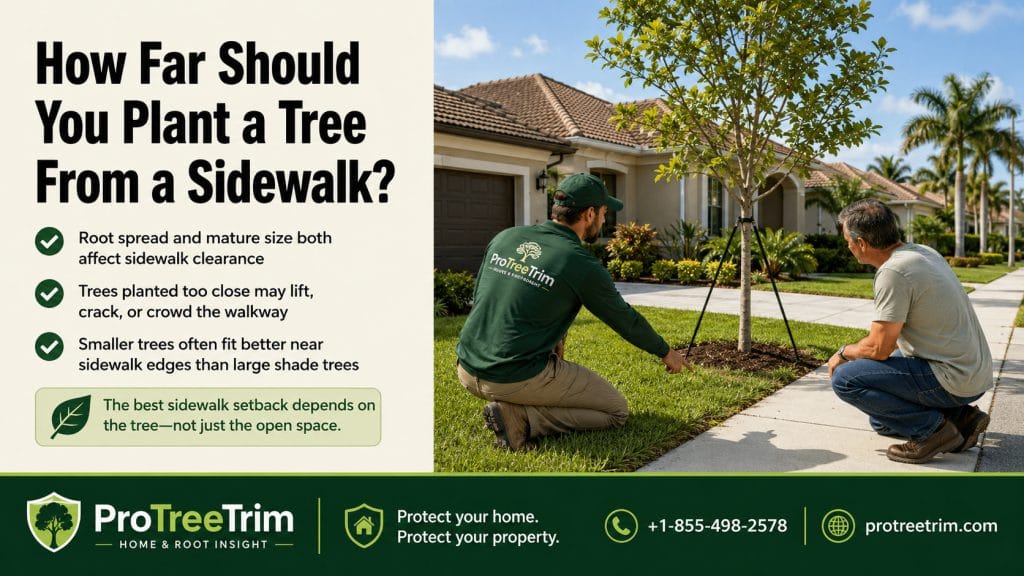
A tree near a sidewalk can make a front yard feel shaded, finished, and welcoming. But if it is planted too close, the same tree can eventually lift concrete, expose roots, narrow the walking path, create trip hazards, and force hard decisions about root cutting or tree removal. The right distance depends on the tree’s mature size, root behavior, sidewalk width, soil space, drainage, and how people use the area.
Continue reading How Far Should You Plant a Tree From a Sidewalk?Guides
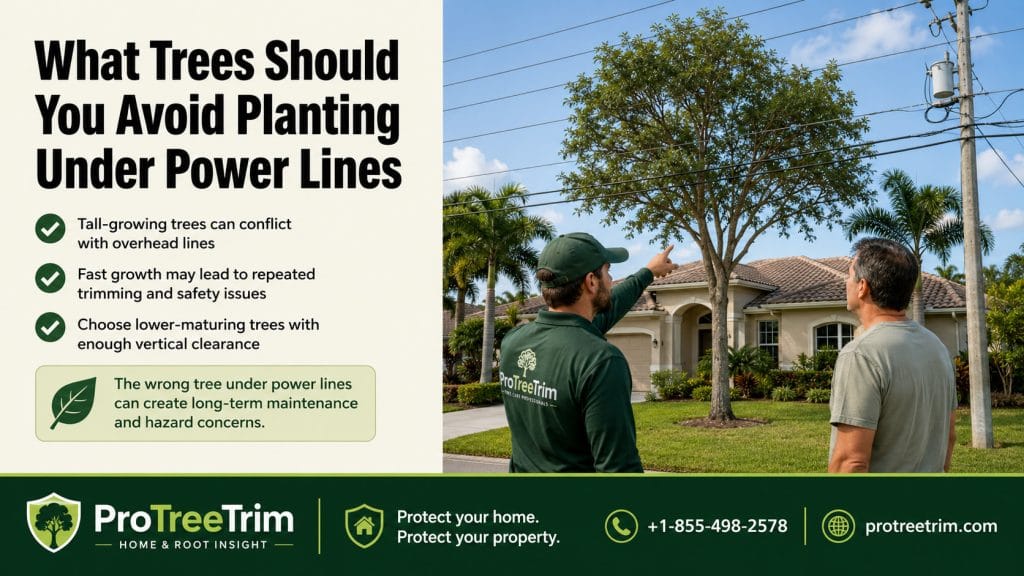
What Trees Should You Avoid Planting Under Power Lines?
The trees to avoid under power lines are the ones that will eventually grow into the lines: tall shade trees, fast-growing trees, broad canopy trees, brittle trees, and any species that needs repeated hard pruning to stay below utility clearance. The best tree for that space is usually a small, low-growing tree or shrub that stays in scale at maturity.
Continue reading What Trees Should You Avoid Planting Under Power Lines?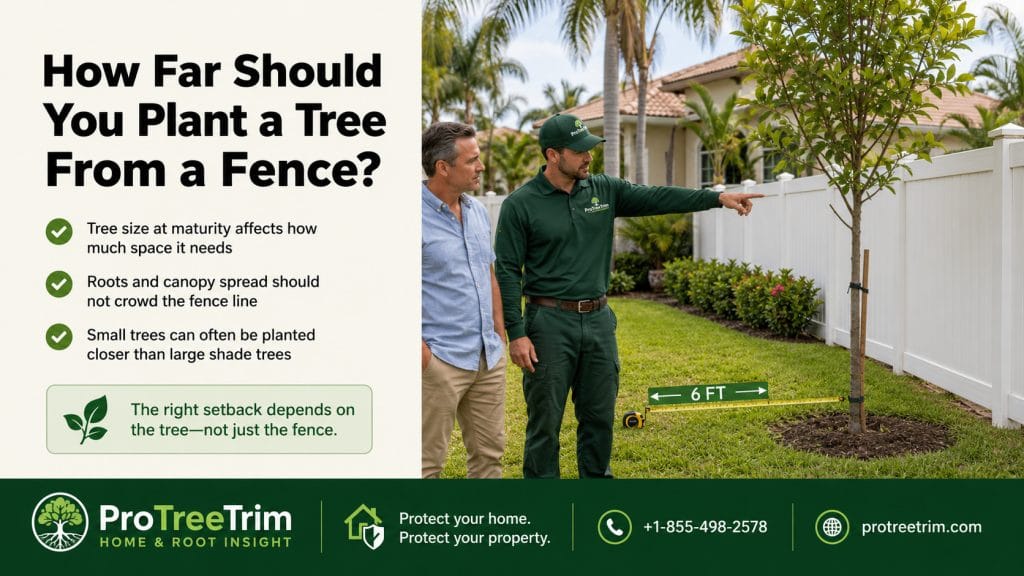
How Far Should You Plant a Tree From a Fence?
A tree near a fence can add privacy, shade, and a more finished look to the yard. But if it is planted too close, that same tree can push fence posts, drop limbs over the property line, crowd the neighbor’s yard, block future access, or become difficult to prune and remove. The right distance depends on the tree’s mature size, root spread, canopy shape, fence type, and how the space will be used years from now.
Continue reading How Far Should You Plant a Tree From a Fence?
What Trees Should You Avoid Planting Near a Septic System?
Planting trees near a septic system can create problems years after the yard looks finished. The wrong tree may send roots toward moist soil, block service access, complicate repairs, or make future removal difficult. The safest approach is to understand where the septic tank, drain field, access lids, and reserve area are before choosing any tree.
Continue reading What Trees Should You Avoid Planting Near a Septic System?
What Trees Should You Avoid Planting Near a Pool?
A tree near a pool can make the yard feel cooler, more private, and more finished. The wrong tree can turn the pool area into a constant cleanup job. Before planting, think beyond shade. A poolside tree has to work with pavers, screens, drainage, roots, debris, wind, and future maintenance access.
Continue reading What Trees Should You Avoid Planting Near a Pool?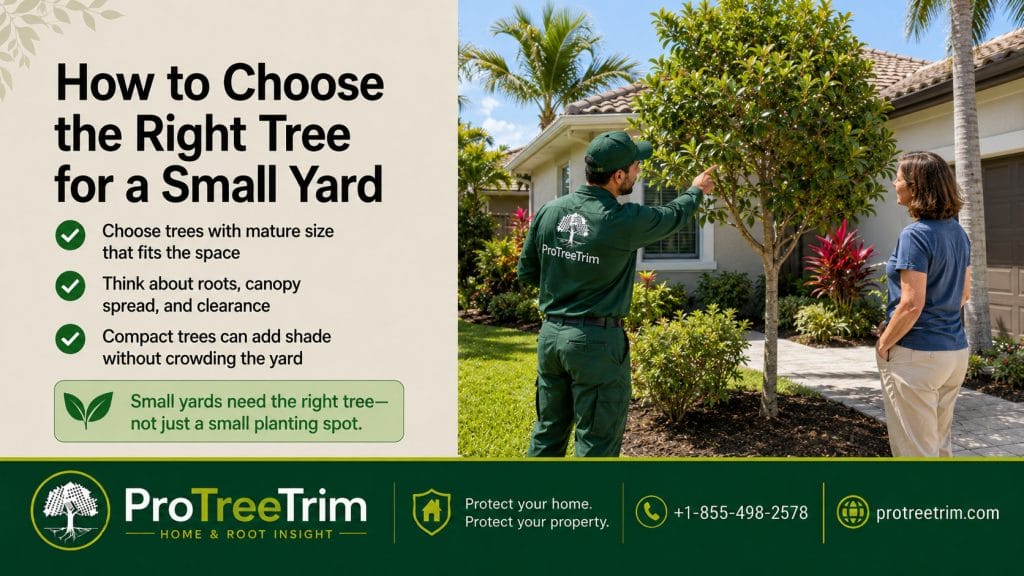
How to Choose the Right Tree for a Small Yard
A small yard does not mean you have to avoid trees. It means the tree has to be chosen with more care. The wrong tree can crowd the house, lift pavers, block windows, rub the roof, drop messy debris, or become expensive to prune later. The right tree can add shade, privacy, curb appeal, and structure without taking over the property.
Continue reading How to Choose the Right Tree for a Small Yard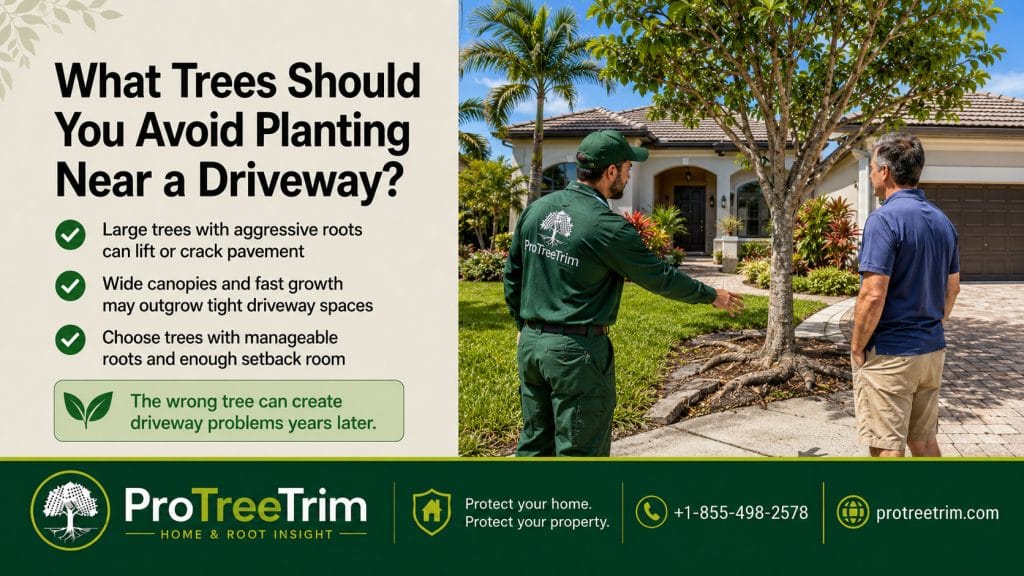
What Trees Should You Avoid Planting Near a Driveway?
A tree near a driveway can be a great feature. It can shade parked cars, soften the front of the home, and make the property feel more established. But the wrong tree in the wrong spot can create years of frustration: lifted pavers, cracked edges, low limbs, sticky residue, falling seed pods, blocked access, and expensive pruning or removal later.
Continue reading What Trees Should You Avoid Planting Near a Driveway?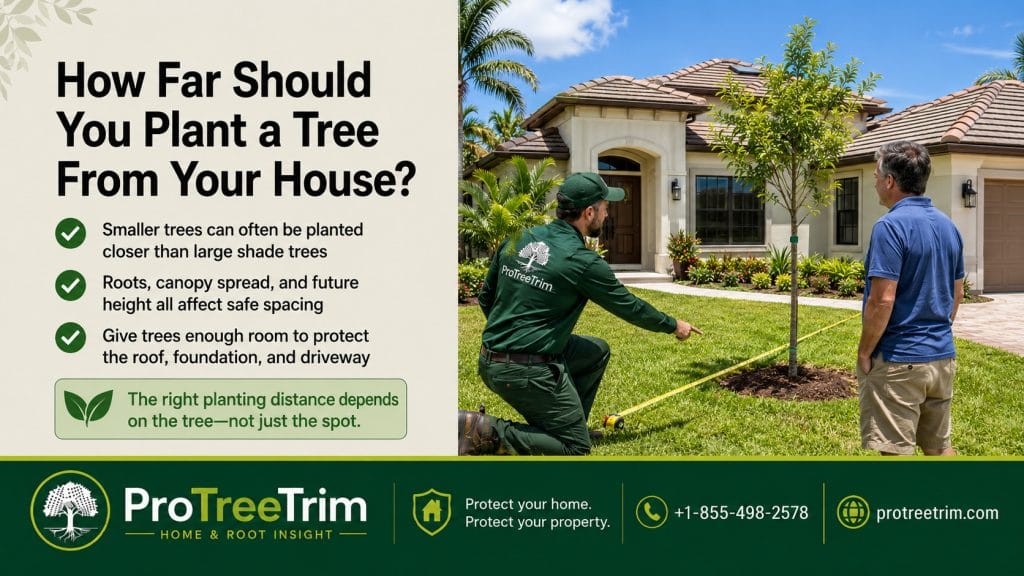
How Far Should You Plant a Tree From Your House?
A tree planted near a house can add shade, curb appeal, privacy, and comfort. A tree planted too close can become a future problem for the roof, gutters, driveway, foundation area, pool cage, walkway, fence, or utility lines. The right distance depends on the tree’s mature size, root behavior, canopy spread, soil, drainage, and the structures around it.
Continue reading How Far Should You Plant a Tree From Your House?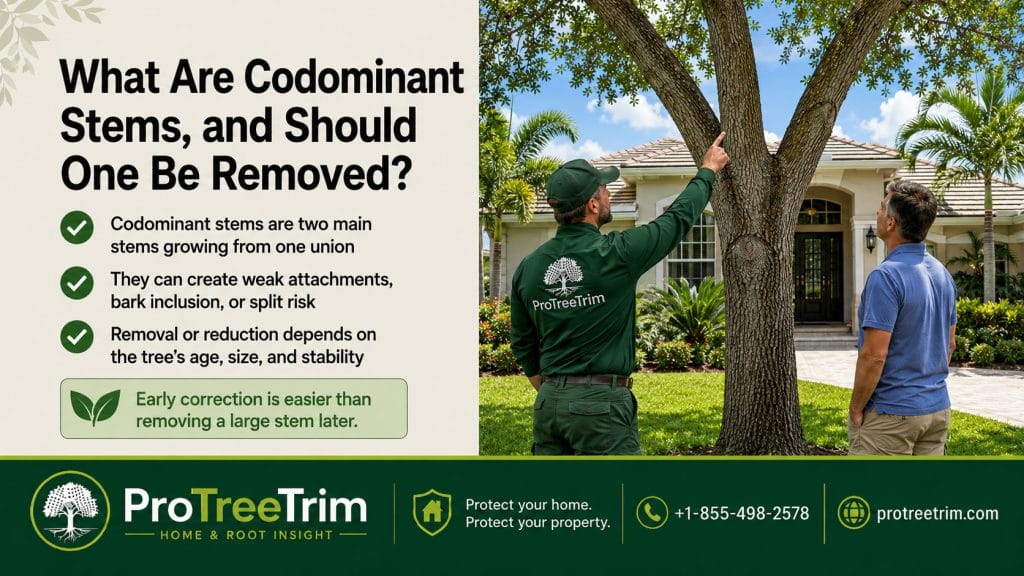
What Are Codominant Stems, and Should One Be Removed?
Codominant stems are two or more main stems growing upward from the same area of a tree, often competing to be the central trunk. They are common in many landscape trees. Sometimes they remain stable for years. Other times, they create a weak union that can split during wind, heavy rain, or as the tree gets larger.
Continue reading What Are Codominant Stems, and Should One Be Removed?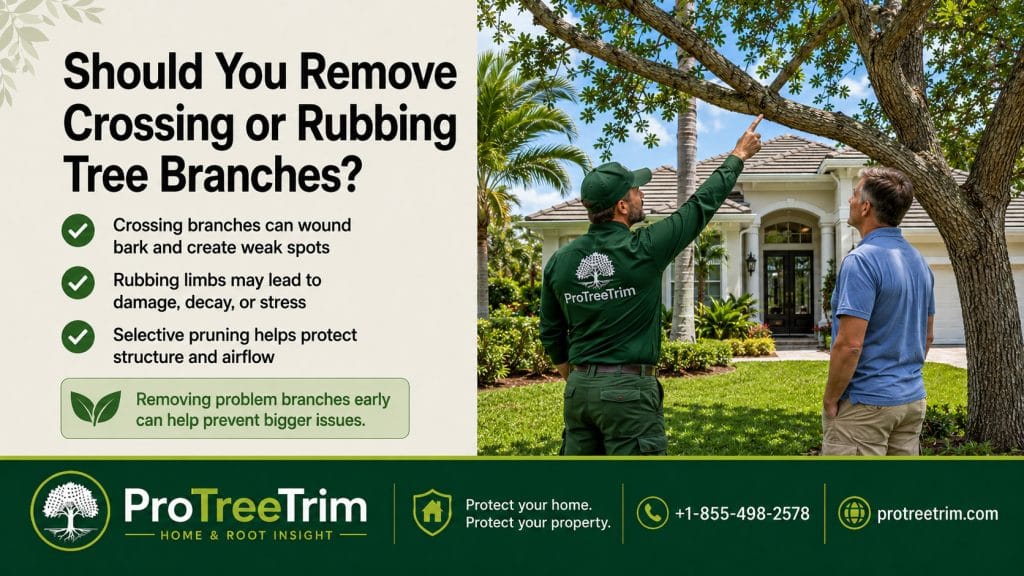
Should You Remove Crossing or Rubbing Tree Branches?
Crossing or rubbing branches are worth paying attention to because they can damage bark, create wounds, and lead to weaker branch structure over time. But that does not mean every crossing branch needs to be cut immediately. The right decision depends on branch size, tree age, location, health, and whether the branches are actually rubbing or just growing near each other.
Continue reading Should You Remove Crossing or Rubbing Tree Branches?