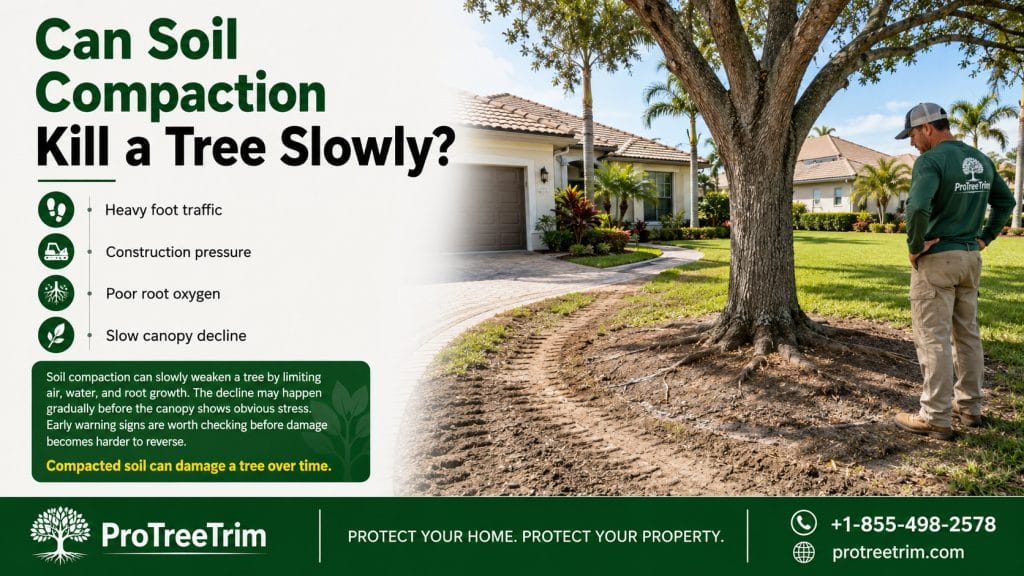
Yes, soil compaction can weaken a tree slowly. The tree may not fall over or turn brown right away. Instead, roots struggle for air, water movement changes, and the canopy may thin over time. Homeowners often notice the damage months later as smaller leaves, dead branch tips, early leaf drop, or one-sided decline.
Continue reading Can Soil Compaction Kill a Tree Slowly?Category: Tree Risk & Property Maintenance
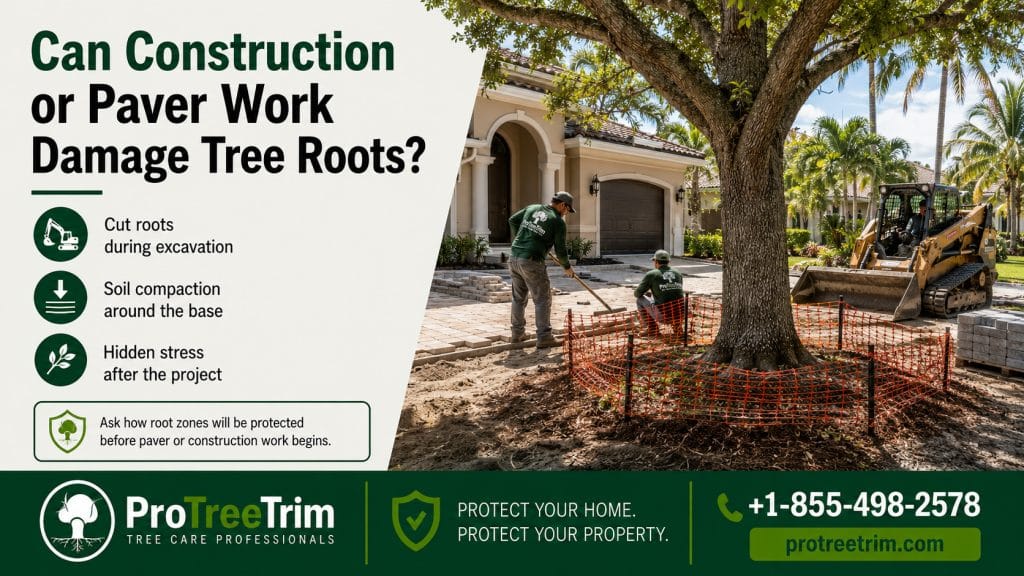
Can Construction or Paver Work Damage Tree Roots?
Yes, construction or paver work can damage tree roots, even when the trunk is never touched. The risk often comes from trenching, digging, soil compaction, grade changes, root cutting, or equipment traffic over the root zone. A tree may look fine right after the project and show stress weeks, months, or even seasons later.
Continue reading Can Construction or Paver Work Damage Tree Roots?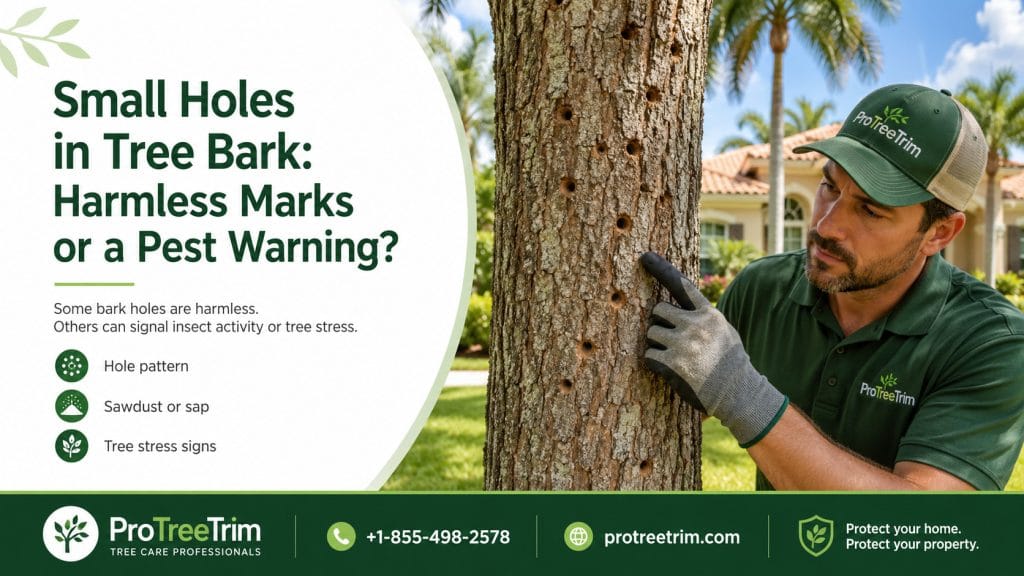
Small Holes in Tree Bark: Harmless Marks or a Pest Warning?
Small holes in tree bark can be harmless, old, or part of normal wildlife activity. They can also be a clue that insects are feeding under the bark. The difference usually comes from the pattern: fresh holes, sawdust-like material, sap, bark lifting, canopy thinning, or dead branches deserve more attention than a few old marks.
Continue reading Small Holes in Tree Bark: Harmless Marks or a Pest Warning?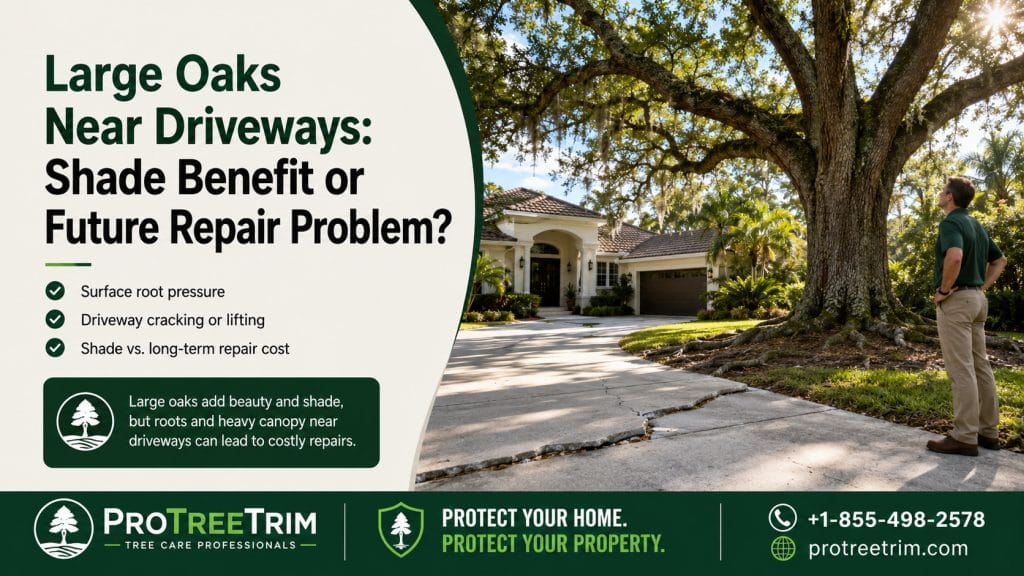
Large Oaks Near Driveways: Shade Benefit or Future Repair Problem?
A large oak near a driveway is not automatically a problem. It may be one of the best shade features on the property. The concern starts when roots lift edges, limbs hang over parked cars, drainage changes around the base, or future pruning and removal access becomes tight.
Continue reading Large Oaks Near Driveways: Shade Benefit or Future Repair Problem?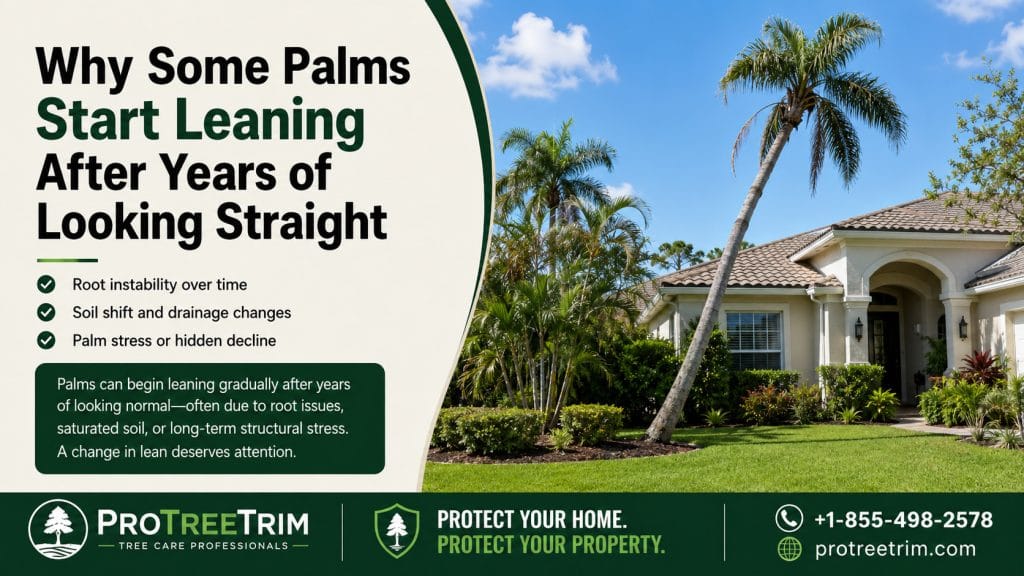
Why Some Palms Start Leaning After Years of Looking Straight
A palm that has stood straight for years and then begins to lean should not be dismissed as “just how palms grow.” Some palms do develop a natural angle over time, but a new lean can point to soil movement, root stress, drainage changes, wind exposure, or damage near the base. The key question is whether the lean is old, slow, and stable—or recent and changing.
Continue reading Why Some Palms Start Leaning After Years of Looking Straight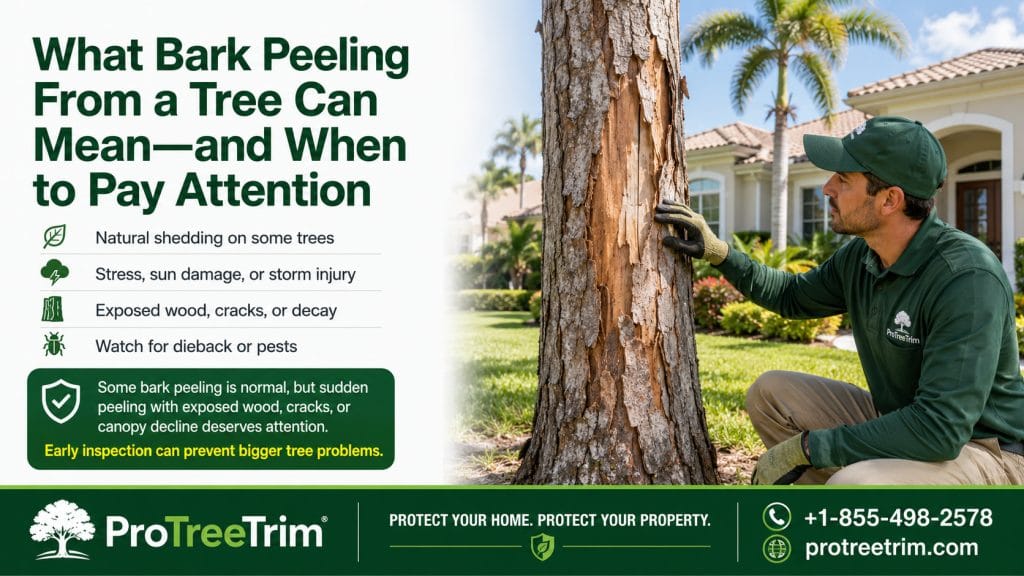
What Bark Peeling From a Tree Can Mean—and When to Pay Attention
Bark peeling from a tree is not always a sign of trouble. Some trees naturally shed outer bark as they grow. The concern starts when peeling is fresh, deep, spreading, wet-looking, accompanied by cracks, or occurring near dead branches, trunk wounds, insects, mushrooms, or a sudden change in the canopy.
Continue reading What Bark Peeling From a Tree Can Mean—and When to Pay Attention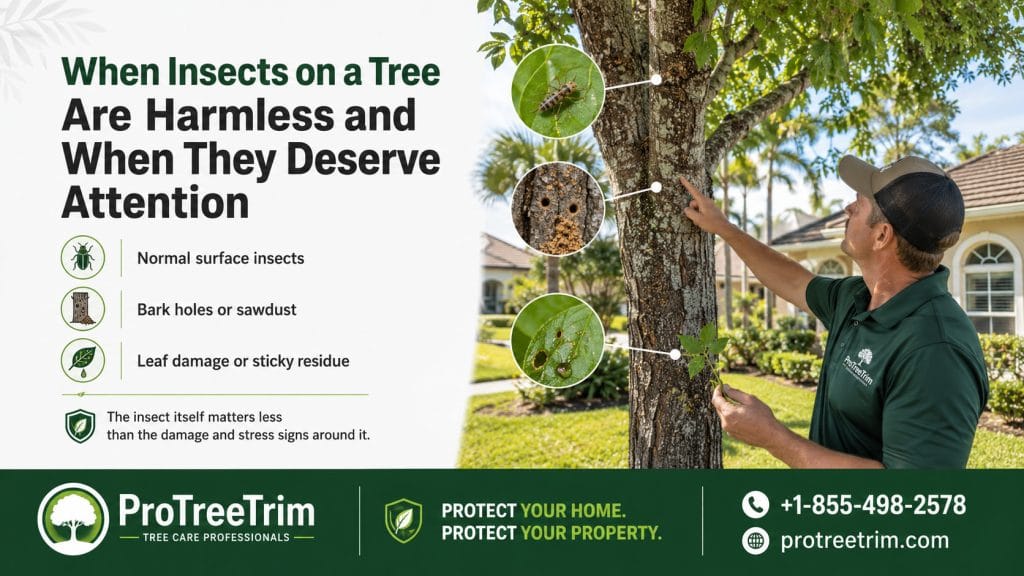
When Insects on a Tree Are Harmless and When They Deserve Attention
Seeing insects on a tree does not automatically mean the tree is in trouble. Many bugs are simply passing through, feeding on other pests, pollinating, or living in nearby mulch. The concern grows when insects appear with leaf damage, sticky residue, bark holes, sawdust-like material, branch dieback, or a tree that is already stressed.
Continue reading When Insects on a Tree Are Harmless and When They Deserve Attention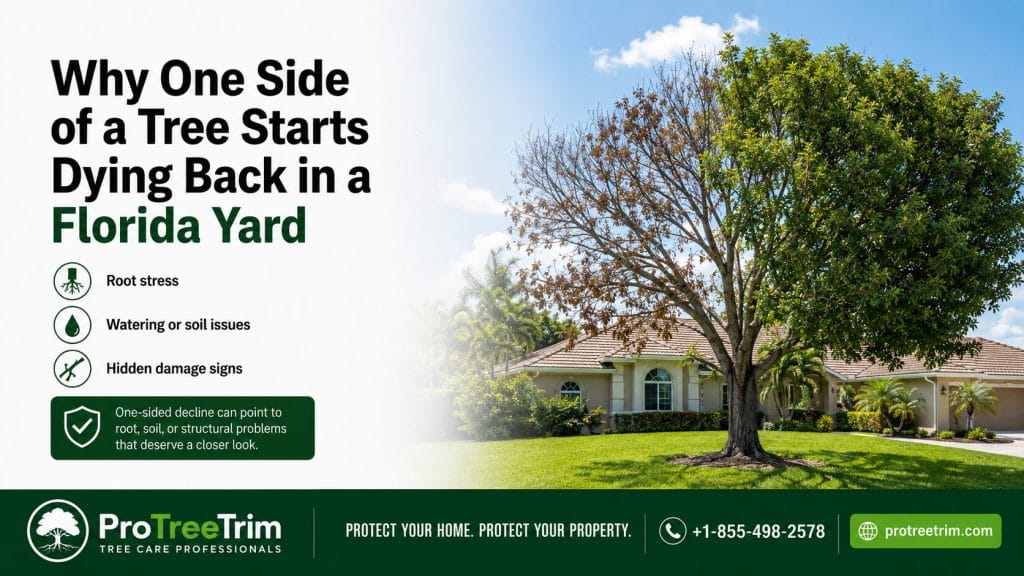
Why One Side of a Tree Starts Dying Back in a Florida Yard
When one side of a tree starts dying back, the problem may be above ground, below ground, or both. In Florida yards, uneven canopy loss can follow root damage, drainage changes, drought stress, construction, pruning wounds, storms, or disease. The important step is not guessing the cause too quickly. Look at what changed around that side of the tree.
Continue reading Why One Side of a Tree Starts Dying Back in a Florida Yard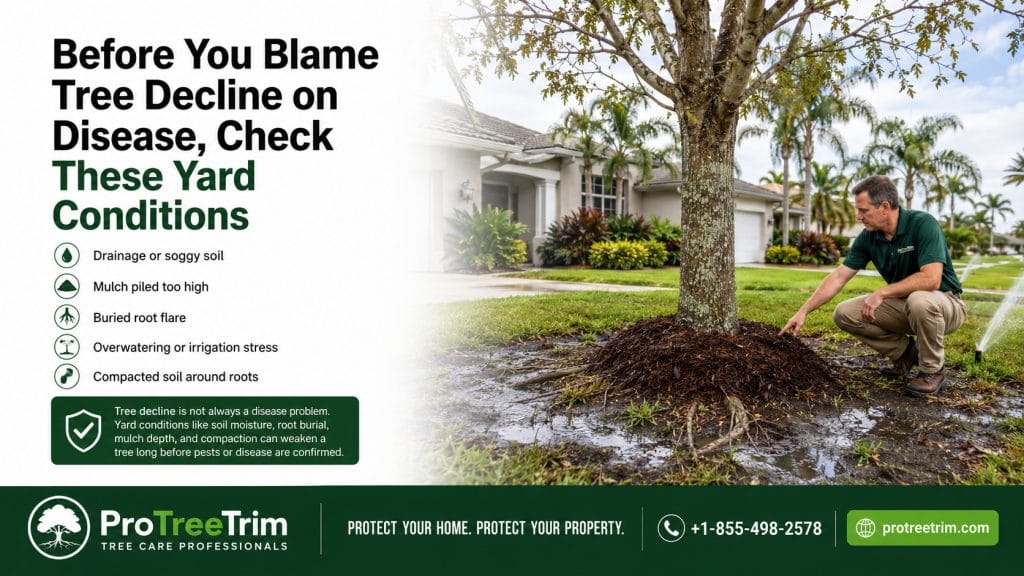
Before You Blame Tree Decline on Disease, Check These Yard Conditions
A tree that looks thin, tired, or uneven is not automatically diseased. Many yard trees decline due to root stress, poor drainage, drought, overwatering, mulch buildup, construction damage, poor pruning, or storm damage. Disease may be part of the picture, but it should not be the first guess before the site conditions are checked.
Continue reading Before You Blame Tree Decline on Disease, Check These Yard Conditions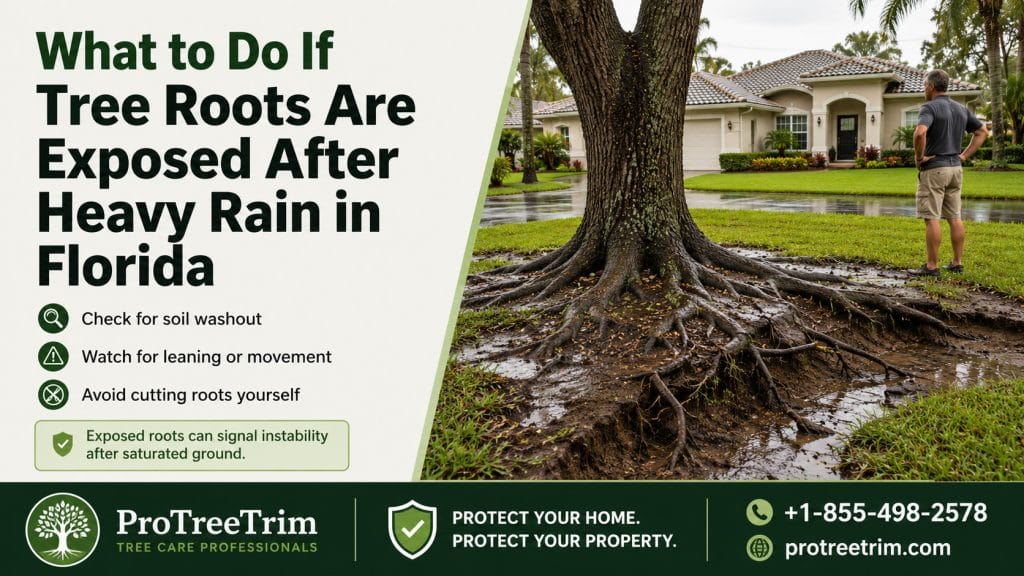
What to Do If Tree Roots Are Exposed After Heavy Rain in Florida
Exposed tree roots after heavy rain are not always an emergency, but they are worth checking. In Florida yards, rain can wash soil away, uncover shallow roots, soften the ground, or reveal movement around the root plate. The key is to distinguish between normal surface roots and a tree that may have shifted.
Continue reading What to Do If Tree Roots Are Exposed After Heavy Rain in Florida